Guide
What recare calls are and why they matter
Patients who are due back do not always schedule, even after texts, emails, or postcards go out. This article explains...
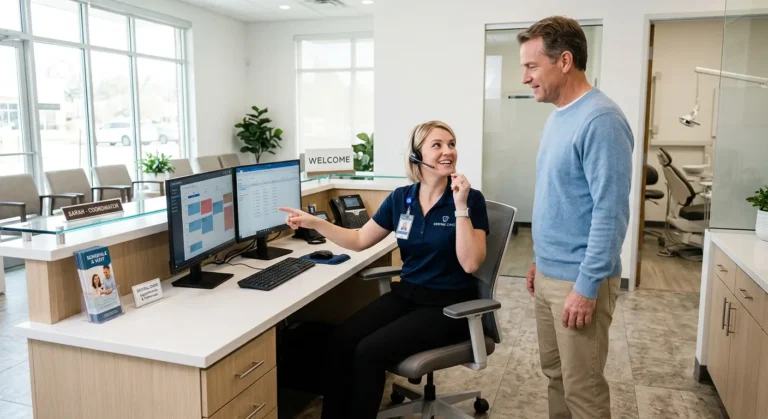
A real person calls your overdue patients and books them back in. Hygiene recall one week, unscheduled treatment the next, so neither list is ever the one that gets forgotten.
Up to 13 attempts per patient. Most software gives up after two.
13 attempts
Before a patient is left alone
Every other week
Hygiene and treatment lists alternate
30 in 100
Attempted patients who end up booked
From $400
Flat monthly fee, set by practice size
How it works
There are two groups of patients a practice loses money on, and most offices only ever get to one of them. We work both, on a rotation, so neither becomes the one that never gets called.
Week one
Patients due or overdue for a cleaning. The routine list, the one everybody intends to work through and nobody finishes. These are patients who already trust your practice and have simply drifted.
Worked: every other week, continuously
Week two
Patients who sat in your chair, agreed to treatment, and never booked it. We go back three years. This is revenue your practice has already earned – the diagnosis is done, the case was accepted, nobody made the call.
Worked: every other week, back three years
Week 1
Hygiene
Week 2
Treatment
Week 3
Hygiene
Week 4
Treatment
Persistence
This is the number that separates a recare service from a reminder system.
13
Attempts on a single patient before we stop trying. Automated recall software sends one message, sometimes two, and moves on. A front desk manages three or four before the day swallows it. We keep going.
Calls go out before work, after work and at weekends, because that is when people actually answer a phone. When nobody picks up we leave a message and call again – the voicemail is not the end of the attempt, it is one of the thirteen.
The most common thing a patient says is that they need to check their schedule. So we call them back the next day. That single habit is where a large share of the bookings come from, and it is exactly the follow-up that gets lost in a busy office.
A patient with unscheduled treatment stays on the list for three years. After thirteen attempts with no answer, we stop and tell you.
The conversation
One job: get the patient back on your schedule. Everything else is deliberately out of scope.
There is no script. Our team introduces themselves as your practice and has a real conversation – which is the only way to hear hesitation, offer a different day, or work out that the reason someone stopped coming has nothing to do with their teeth.
When a patient starts asking about cost, coverage, or whether they really need the treatment, we do not answer from the outside. We encourage them to come in where those questions can be answered properly, and we tell your office to be ready for it – or to call the patient directly if that is better.
Chasing outstanding balances is real work and it is a different conversation entirely – mixing it into a recare call turns a friendly reminder into an awkward one. It sits under patient billing instead.
Reaching people
You almost certainly already pay for something that sends recall texts. A quarter of your patients are probably still overdue.
That is not because texting does not work. It is because automated texting stops working. Patients get so many automated messages that they tune them out, and eventually they unsubscribe – and once they have, that channel is closed to your practice permanently.
We use text and email too, where your patients have given consent. The difference is that ours are written by the person who is going to call them, with their name in it, about their appointment. They are not talking to a machine, and they answer differently when they know it.
Where a practice does not have consent on file for text and email, we work the phone. It is slower and it still works, because thirteen calls beats one ignored message.
The numbers
These are our own figures, and we would rather publish them than describe results in adjectives.
Attempted
Spoken to
Booked
Roughly forty out of every hundred patients we attempt end up in an actual conversation. Of those forty, about thirty book an appointment.
The gap between one hundred and forty is where the thirteen attempts earn their keep. Reaching a working adult by phone is the hard part of this job. Once someone is actually on the line, most of them want to come back – they just needed asking.
Reporting
You get the log, not a summary. Every attempt is on it, including the ones that went nowhere.
Monthly call log
Example
| Date | Patient | Phone | Outcome | Next |
|---|---|---|---|---|
| 04 Aug | M. Alvarez | (630) 555-0142 | Scheduled | 19 Aug, 10:00 |
| 04 Aug | R. Whitfield | (630) 555-0198 | Checking schedule | Call back 05 Aug |
| 05 Aug | R. Whitfield | (630) 555-0198 | Scheduled | 02 Sep, 14:30 |
| 05 Aug | D. Okafor | (630) 555-0177 | Voicemail, attempt 4 | Call back 08 Aug |
| 06 Aug | S. Brennan | (630) 555-0163 | Declined – moved away | Mark inactive |
| 06 Aug | K. Lindqvist | (630) 555-0121 | Scheduled | 21 Aug, 08:00 |
The declines are on there too. A recare report that only shows the wins is not a report, it is a sales document – and it tells you nothing about which patients to stop paying to chase.
Every row shows the date, who was called, what happened, and what happens next. Patients who asked to be called back appear twice, because they were called twice.
Cancellations
A full hygiene schedule is not a schedule without holes in it.
Someone cancels on Tuesday afternoon for a Wednesday morning slot, and that hour is gone – it is not rescheduled, it is simply not worked. For a practice running near capacity, cancellations are where the lost production actually lives.
Because we are already in your schedule and already working a list of patients who want to come in, those gaps get filled. A patient who was going to be called next month gets called today instead, and offered the slot that just opened.
Pricing
From $400 / month
Priced on the size of your practice, so that everybody who is due gets called.
Not per call, not per booking, not per patient. You know what the month costs before it starts, and the list gets worked to the end whether the names on it look promising or not.
Some services charge nothing unless they book the appointment. It sounds like the safer deal, and on the first read it is – but it changes who gets called.
A company paid per appointment has every reason to work the easy names and quietly abandon the difficult ones. The patient who needs eleven attempts and might still say no is not worth their time. That patient is exactly who this service exists for, and thirteen attempts on an unpromising name is only possible when the fee does not depend on the outcome.
A flat fee also means the practice decides who is on the list, rather than a vendor’s incentives deciding it.
Across their time with a practice, the average dental patient generates around $3,500 in revenue. That is a lifetime figure rather than a monthly one – but it is the reason a single patient who comes back after two years away is not a small thing.
Your systems
Nothing to prepare, nothing to send us every month. That is the part offices expect to have to do, and they do not.
We run the reports out of your software ourselves. Our team works across most major practice management systems, so no one at your office has to build a spreadsheet of overdue patients.
Every recall list has patients marked overdue who came in last week and patients due who were never flagged. We check the record before each call and run more than one report, so the gaps get picked up rather than repeated.
We work from your live schedule and ask for the doctor and hygienist availability up front. Appointments go into real open slots, not over a lunch break.
Access is a login to your practice management software and remote access to the system – the same as any member of your team would have. A Business Associate Agreement is signed before anyone touches anything, and everyone doing this work is based in the United States. Nothing is subcontracted and nothing goes offshore.
Getting started
1
Thirty minutes on your patient numbers, your overdue list and what your team is managing to get to now. A free billing audit is available afterwards.
2
A signed agreement, a login to your software, and remote access. That is the whole setup, and there is no setup fee.
3
We run the reports, check them against the patient records, and sort the hygiene and treatment lists ourselves.
4
Once we have what we need, calls start the next day. You get a named person on your account and their direct contact details.
Good fit
Solo
When the same person answers the phone, checks patients in and is meant to make recall calls, the recall calls are what gives way. Every time.
Growing
Two thousand patients on file and no idea how many are overdue. The bigger the list gets, the less likely anyone is to start working it.
Near capacity
Booked out three weeks and still losing hours to cancellations. Filling those gaps is a different job from filling a diary.
Worth saying plainly
Recall calls do not get made because nobody wants to make them.
It is the one task on a front desk with no deadline and nobody standing in front of you. There is always something more urgent, and a patient who is not in the building loses to a patient who is. That is not a failing of your team – it is what happens to every task that can be postponed without anyone noticing.
Taking it off their desk does not take anyone’s hours away. It frees them for the patients actually in the practice, and it means the calls get made by people whose entire job is making them.
Questions
Recare calls are outbound calls to patients who are due, overdue, or who accepted treatment and never booked it. Smart Dental Billing works two lists on an alternating fortnightly rotation – hygiene recall one week, unscheduled treatment the next – and books patients directly into the practice’s own schedule.
Up to thirteen attempts before the patient is left alone. Calls are made before work, after work and at weekends, and a voicemail counts as one attempt rather than the end of the effort. Automated recall software typically sends one or two messages and stops.
Three years. A patient who accepted treatment within that window stays on the list until they book, decline, or reach thirteen unanswered attempts.
From $400 a month, set by the size of the practice rather than by call or booking volume. Both lists are included. Adding other Smart Dental Billing services lowers the rate across the account. Month to month, no setup fee, thirty days notice.
Because per-booking pricing changes who gets called. A company paid per appointment works the easy names and drops the difficult ones, and the difficult ones are the patients this service exists for. A flat fee is what makes thirteen attempts on an unpromising patient possible.
Out of every hundred patients attempted, Smart Dental Billing reaches roughly forty and books roughly thirty. Reaching people is the hard part – once a patient is actually on the phone, most of them want to come back.
Yes, where the practice has patient consent on file. Messages are written by the person handling that patient rather than sent automatically, which is why they get answered. Without consent on file, the work is done by phone.
No. Callers introduce themselves as the practice and have a real conversation. A script cannot hear hesitation, offer a different day, or find out that the reason a patient stopped coming has nothing to do with their teeth.
Those questions are not answered over the phone. The patient is encouraged to come in where they can be answered properly, and the office is told to expect the question – or given the option to call the patient back directly.
No. Balance conversations are a separate service under patient billing. Mixing collections into a recare call changes the nature of the call and makes patients less likely to book.
Smart Dental Billing does. The reports are run directly out of the practice’s software and checked against patient records before calling, so the office does not have to prepare or send anything each month.
Most are. Patients get marked overdue after they have already been in, and others are never flagged at all. Records are checked before each call and more than one report is run, so the errors get found rather than repeated.
Appointments are made from the live schedule, using the doctor and hygienist availability the practice provides at the start. Patients go into genuine open slots.
A login to the practice management software and remote access to the system, the same as a member of the practice’s own team. A Business Associate Agreement is signed before any access is granted.
Yes. Recare calls are available on their own. Practices that add other services pay a lower rate across the account, but there is no requirement to bundle.
Calls can begin the day after the agreement is signed and access is granted, provided the practice information is complete.
Related reading
Guide
Patients who are due back do not always schedule, even after texts, emails, or postcards go out. This article explains...
Guide
Reminders can go out on time and still leave openings on the schedule when patients do not respond. This article...

Guide
How recare calls increase completed treatments Most practices have it. A patient agrees to treatment, you block time, the plan...
Thirty minutes, a free billing audit, and an honest look at how many of your patients are overdue right now. Flat monthly fee, no setup cost, thirty days notice.
Or email us at info@smartdentalbilling.com or call (630) 449-2889.