
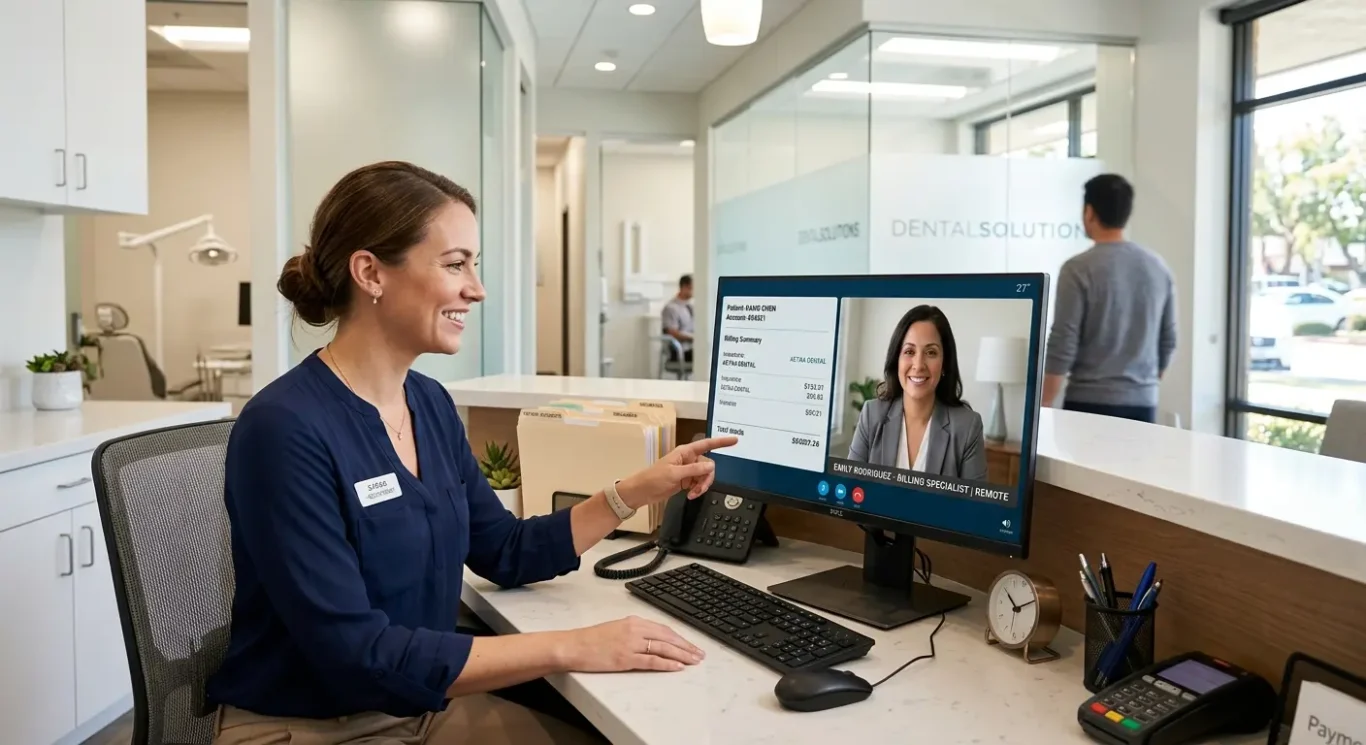
Does outsourcing dental billing replace staff
What usually sits behind this question is not billing alone. It is concern about losing control, cutting front desk hours, creating crossed wires with patients, or handing off sensitive work to someone outside the office. That hesitation is reasonable, especially when the team is already stretched thin and no one wants more confusion.
In most cases, outsourced dental billing supports non-clinical administrative work rather than replacing every in-office role. The front desk still handles the parts of the patient experience that need to stay close to the practice, while billing tasks like claim submission, follow-up, and Accounts Receivable (AR) support can be handled off-site with clear handoffs and defined responsibilities. This article explains how that working relationship typically looks, where the limits are, and what usually stays in-house.
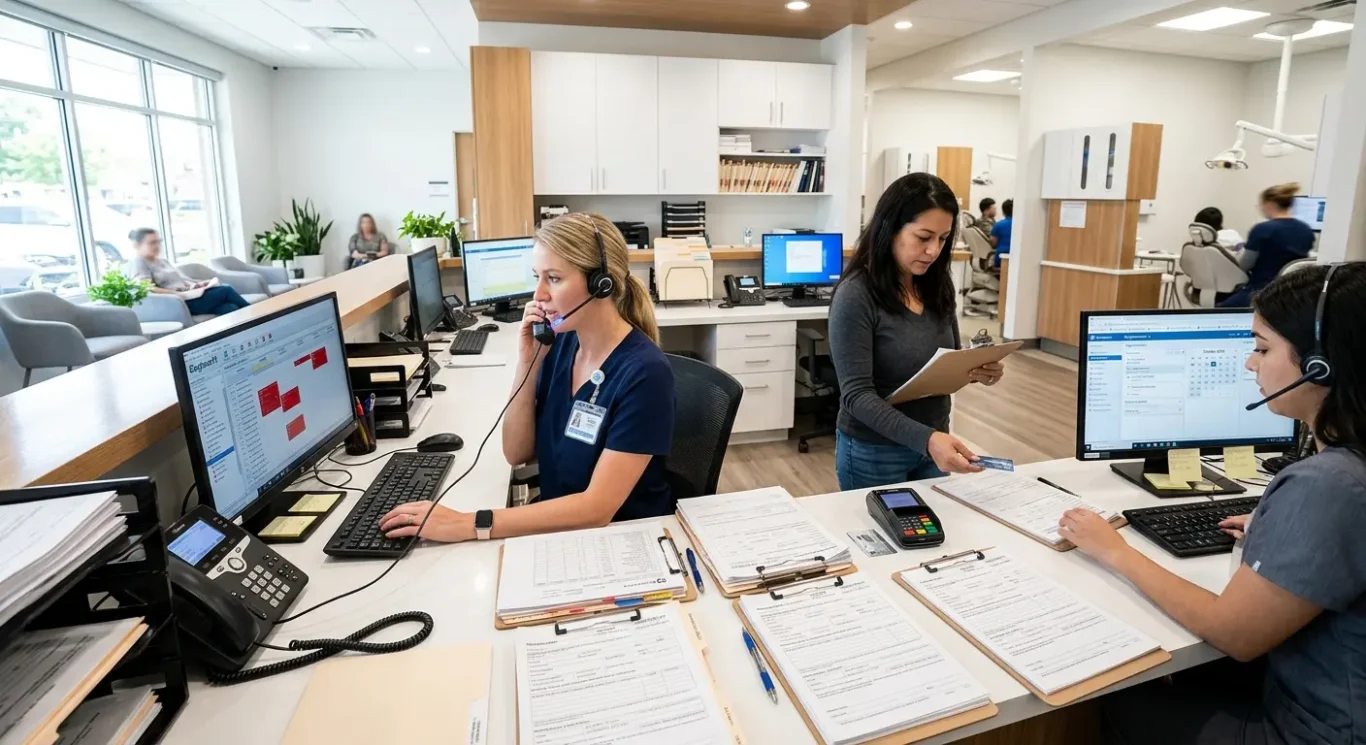
Why this question comes up in busy dental offices
The concern usually starts with workload, not resistance to help.
In many offices, the same front desk team is answering phones, scheduling, checking patients in and out, coordinating treatment, responding to patient questions, and trying to stay on top of insurance follow-up at the same time.
When that happens, billing work often gets pushed behind whatever is most urgent in the moment. Claims may sit longer than planned, denied claims can wait for rework, and older Accounts Receivable (AR) starts to build because patient-facing tasks naturally come first during the day.
Why owners and managers hesitate
For owners and managers, the question is not just who sends claims. It is whether outsourcing changes someone’s job, creates tension between the front desk and an outside billing partner, or makes it harder to see what is happening with outstanding insurance money and patient balances.
That concern is reasonable because billing touches cash flow, staff roles, and day-to-day communication with patients and payers. Even when a practice knows something needs attention, it may still be cautious about making a change that affects visibility or how work moves between the office and an off-site team.
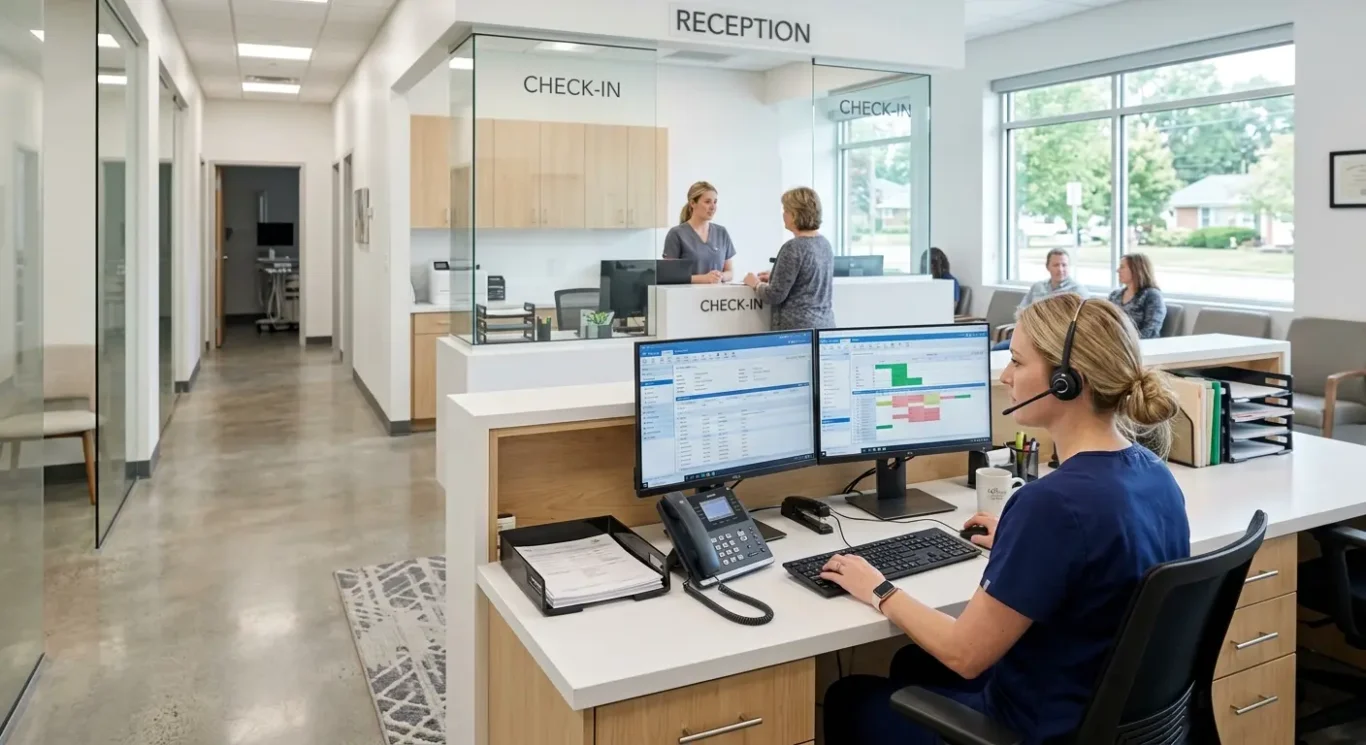
What outsourced dental billing actually handles
This is usually off-site administrative support, with clear limits on what stays with the practice.
The work typically stays in the non-clinical lane. That can include insurance claim submission, insurance claim follow-up, patient billing support, insurance verification, and dental recare calls when those services are part of the arrangement.
What remains in-house
An off-site dental billing team does not replace chairside duties, diagnosis, treatment discussions, or other clinical decisions. Front desk and office staff still handle the parts of the patient experience that need direct contact in the office, along with any internal steps the practice chooses to keep local.
The split should be defined before work starts
Some practices only want help with claim submission and follow-up. Others may also want support with patient balances, insurance verification, or recare outreach, but not every service is included by default.
The exact division of work varies by practice and should be agreed on upfront so there is no confusion about who handles each task, who communicates with patients and payers, and when items need to go back to the office for review. If questions come up around HIPAA or insurance rules, the practice should confirm those points with its own advisor.

What usually stays with the in-office team
Some work still needs the people who are in the practice and making day-to-day office decisions.
Patient-facing conversations at check-in and check-out usually remain in the office because they happen in real time and often involve scheduling, signatures, payments, and questions that need immediate handling.
Clinical and treatment decisions stay internal
Clinical documentation, diagnosis, and treatment decisions stay with the doctor and clinical team. An off-site billing partner may work from the information the practice provides for administrative follow-up, but it does not direct care or decide what belongs in the clinical record.
Financial exceptions still need office approval
Final office decisions on financial policies, write-offs, payment arrangements, and exceptions remain with practice leadership. That includes the calls that affect how the practice wants to handle patient balances, internal standards, and when something should be approved, adjusted, or held for review.
This is why outsourcing usually works as support, not full replacement. The office keeps the parts that require in-person judgment, direct patient contact, and leadership approval, while off-site staff handle defined non-clinical billing tasks within those boundaries.
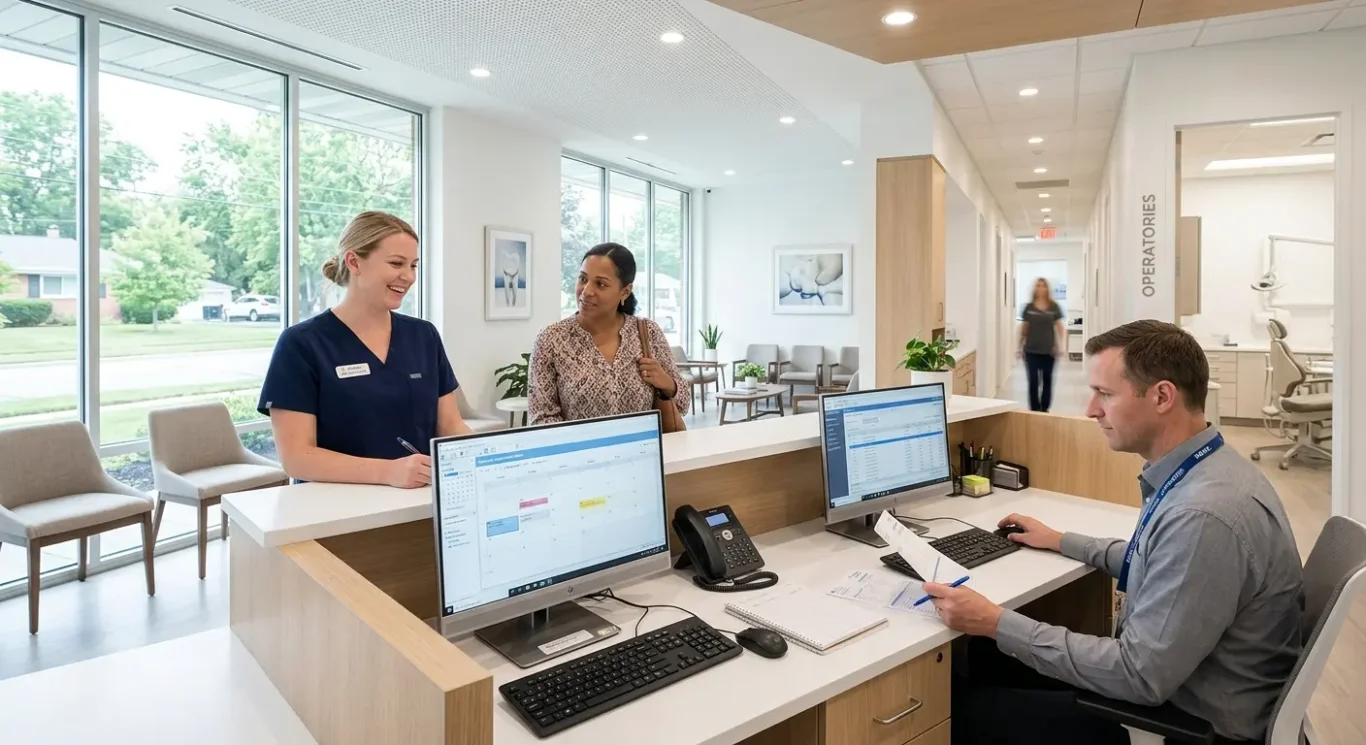
Does outsourcing replace staff or support them
For most practices, it works as added dental billing support rather than an automatic staffing change.
Outsourcing dental billing does not automatically replace staff. In many offices, it is used to take pressure off the front desk, keep insurance follow-up moving, and help prevent billing tasks from falling behind when the team is already stretched.
Why practices add outside help
Some practices use an off-site billing team to cover gaps caused by turnover, time limits, or uneven follow-up on older claims and Accounts Receivable (AR). Others want more consistency in claim submission, payer follow-up, patient balance work, insurance verification, or recare calls when those services are part of the arrangement.
Staffing decisions still stay with the practice
Whether any role changes happen depends on the practice’s current workload, how responsibilities are divided today, and what management wants in-house versus off-site. One office may keep the same team and shift billing tasks away from the front desk, while another may redesign duties after looking at bottlenecks, training needs, and daily coverage.
That is why outsourcing is usually best viewed as a support model with a defined scope, not a promise about headcount or payroll. The practice decides how people, processes, and communication should work together.
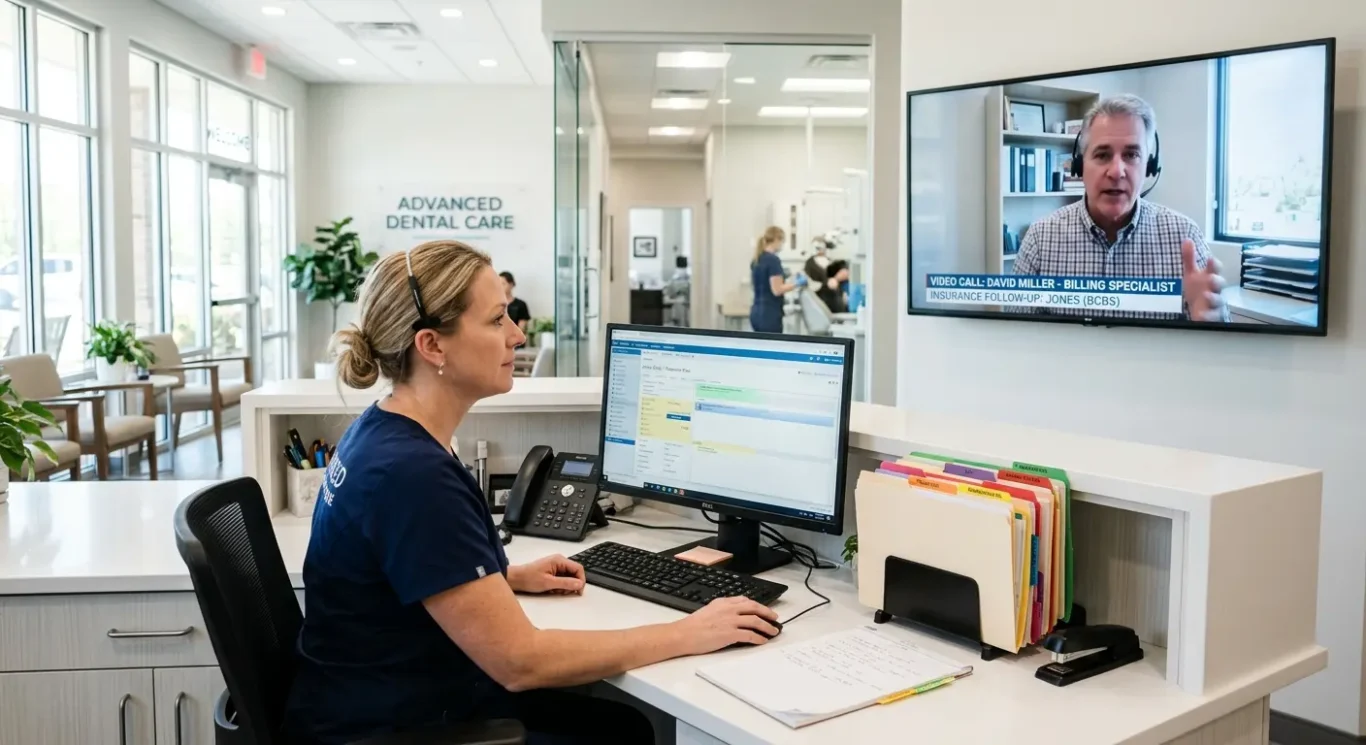
How the collaboration usually works day to day
The office provides the details, and the billing team handles the follow-up work assigned to them.
Most arrangements work best when the practice sends the information needed to move work forward, such as clinical notes already approved internally, insurance details, patient account updates, and answers to exceptions that need office input. The off-site billing team then handles the non-clinical tasks within scope, such as claim follow-up, status checks, patient balance follow-up, insurance verification, and related account work.
Clear handoffs matter
Problems usually start when a claim status question, missing information request, patient balance issue, or insurance verification need sits between teams with no clear owner. A simple handoff process helps each item go to the right person fast, so the office knows when to answer a question and the billing team knows when to continue follow-up.
One point of contact in the office often helps keep issues from bouncing between the front desk, management, and clinical staff. That person does not need to do every task, but usually helps route questions, confirm priorities, and return decisions that only the practice can make.
The exact workflow varies by office, service mix, and how responsibilities are divided, so it helps to set expectations early and adjust them as patterns show up. If a process touches HIPAA or payer rules, the practice should confirm requirements with its own advisor.
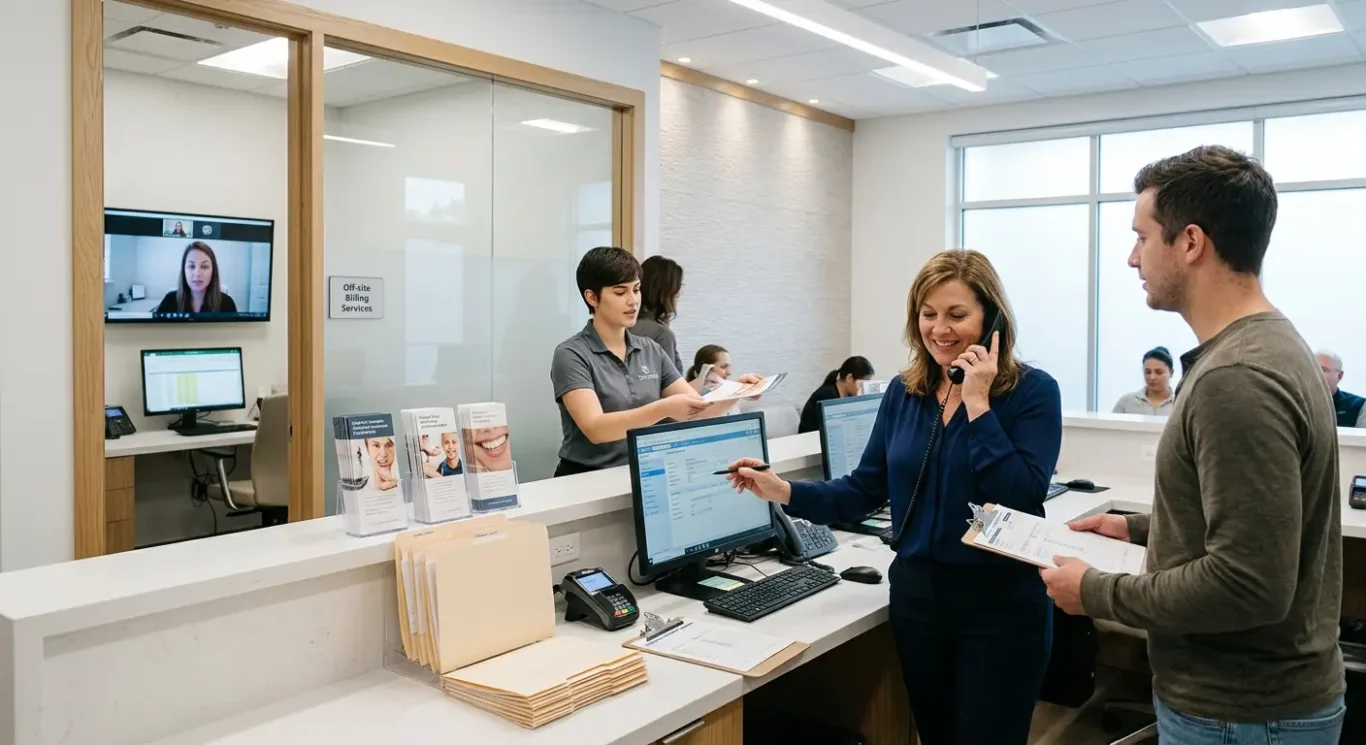
Where outsourced billing can reduce pressure on the front desk
The main benefit is taking non-patient-facing billing work out of the middle of a busy day.
Front desk staff usually need to stay available for real-time work such as answering phones, checking patients in and out, collecting information, scheduling, and handling questions that need an immediate response. Tasks that do not depend on a patient standing at the desk or calling right now are often easier to move off-site.
Work that is often handled off-site
That can include claim follow-up, aging insurance review, patient balance follow-up, and eligibility checks done before the visit. These are important tasks, but they usually involve payer research, account review, documentation checks, and repeated follow-up rather than live patient interaction.
Not every item can leave the office. If a payer needs something the practice must confirm, or a patient has a question that depends on an in-office decision, the office still has to respond. The goal is not to move every billing duty out, but to separate work that needs the front desk in real time from work that can be worked in batches off-site.
When those follow-up tasks are not constantly landing back on the same people who are covering the schedule and phones, the front desk gets fewer interruptions during the day. That usually makes it easier to stay focused on patient-facing responsibilities while billing items continue moving in the background.

Common fears about outsourcing and the practical response
The main concerns usually come down to who stays in charge, how information moves, whether work is done correctly, and how Protected Health Information is handled.
A practice does not have to give up control to get billing help. The office can set rules for write-offs, patient contact, claim follow-up, and when an issue must be sent back for review. It can also define who approves exceptions, how often updates are sent, and what reporting the owner or manager expects to see.
Location is not the same as communication
Most communication problems come from unclear responsibilities, not from work being done off-site. If the office knows which questions it still owns and the billing team knows which items it can act on without waiting, fewer accounts stall. Regular status updates and a clear escalation path matter more than whether the person working the claim is sitting at the front desk.
Accuracy concerns are reasonable because billing errors affect cash flow and patient trust. That is why practices usually need a defined process for missing information, claim corrections, and payer responses that require an office decision. The cleaner the handoff and review process, the easier it is to catch problems early instead of finding them months later in Accounts Receivable (AR).
HIPAA questions should be reviewed before any data is shared
Privacy concerns should be addressed up front, especially when Protected Health Information (PHI) is involved. Any sharing, access, or handling of PHI should be reviewed with the practice’s own compliance or legal advisor before records are sent or access is granted. That review should cover the practice’s policies, required agreements, and any limits on what information can be used for non-clinical billing work.

Signs a practice may need billing support without replacing anyone
These are day-to-day warning signs that important non-clinical work keeps getting delayed, even when the team is doing its best.
One common sign is that older insurance balances are still on the books because no one has protected time to work them consistently. The issue is usually not effort. It is that follow-up takes focus, and that focus gets broken when the same staff members are also handling check-ins, phones, and schedule changes.
When front desk coverage keeps winning
Denied or unpaid claims often sit longer than they should when staff have to keep shifting back to patient-facing tasks. A claim may need a correction, a payer call, or a document request, but it stays untouched because the person who knows the account is covering the desk again.
Work that gets postponed first
Verification, patient billing follow-up, and recare calls are also easy to push aside when the day gets crowded. If those tasks keep getting moved to tomorrow, then next week, that usually points to a capacity problem rather than a training problem.
Practices in this position are not necessarily looking to replace team members. They are often trying to keep the front desk focused on in-office responsibilities while routine billing and follow-up work continues off-site in a steady way.

Questions to ask before handing off billing tasks
Use this as a practical checklist so the office can judge fit, workload, and communication needs without treating it like an all-or-nothing decision.
Start with the work that is actually slipping now, not the full billing process on paper. If unpaid claims, older Accounts Receivable (AR), insurance verification, patient balance follow-up, or recare calls keep getting pushed back, that is the part to examine first.
What the outside team needs
Any outside billing support can only work from the information the practice provides. That usually means clear patient and payer details, supporting documents already required by the office, notes that explain prior actions on an account, and instructions on how the practice wants exceptions handled. If information is often incomplete or scattered, the handoff usually gets slower and more error-prone.
Who makes decisions inside the office
Someone in the practice still needs to own answers, approvals, and review. That person may be the office manager, billing lead, or another designated team member who can respond to questions, decide how to handle payer issues that need office input, and check whether follow-up is moving in the right direction.
It also helps to ask how progress will be reviewed and what should be escalated right away versus grouped into a regular check-in. Not every office has the same bottlenecks, so the best handoff is usually the one built around the tasks falling behind, the information available, and the internal point person who can keep decisions moving.

What a realistic expectation looks like
Good support helps work move steadily, but it does not remove payer delays or the need for office decisions.
Outsourced billing can improve consistency because claims, follow-up, and unpaid balances are worked in a more regular way. That said, progress still depends on timely information from the practice and on how quickly each payer responds.
Where the office still has to stay involved
Some issues still need office input, especially when supporting documents are missing, notes need clarification, or a patient question has to be handled by someone in the practice. If the outside team is waiting on records, account history, or direction on an exception, the account usually pauses until that information is available.
Results also vary by payer. One plan may process quickly, while another may take longer to review, ask for more information, or handle corrections differently.
Why handoff clarity matters
Existing backlog matters too, and so does how clearly responsibilities are assigned between the office and the outside team. When everyone knows who sends claim details, who answers patient billing questions, who handles escalations, and who reviews older Accounts Receivable (AR), follow-up tends to stay organized instead of circling back through the front desk.
Questions We Hear From Every Practice
Words from the Dental Billing Experts
A common problem in outsourced billing is delayed follow-up because the office and outside team are waiting on each other, and this often shows up when missing claim documentation is not sent back quickly. That pattern does not mean staff are unnecessary. It means roles need to be clear so work keeps moving.
The practical judgment call is that outsourcing dental billing usually supports staff rather than replaces them, because an off-site team can handle non-clinical billing tasks while the practice still needs someone in-house to answer questions, share updates, and make office-level decisions.