

How outsourced billing helps practice growth
Growth usually shows up at the front desk before it shows up anywhere else. More patients means more insurance claims to submit, more unpaid balances to track, more eligibility questions, and more follow-up with payers, all while the same team is still answering phones and keeping the schedule moving. That is where outsourced billing can make sense – not as a drastic change, just as added administrative support for practices that need steady capacity and cleaner billing follow-through without rushing to hire in-house.
For a growing practice, consistency matters as much as volume. Claims still need to go out on time, Accounts Receivable (AR) still needs attention, and patient billing cannot sit untouched for weeks because the office got busy again. A good outsourced dental billing setup helps create that stability during growth, especially when staffing is tight or training keeps getting pushed to next month.
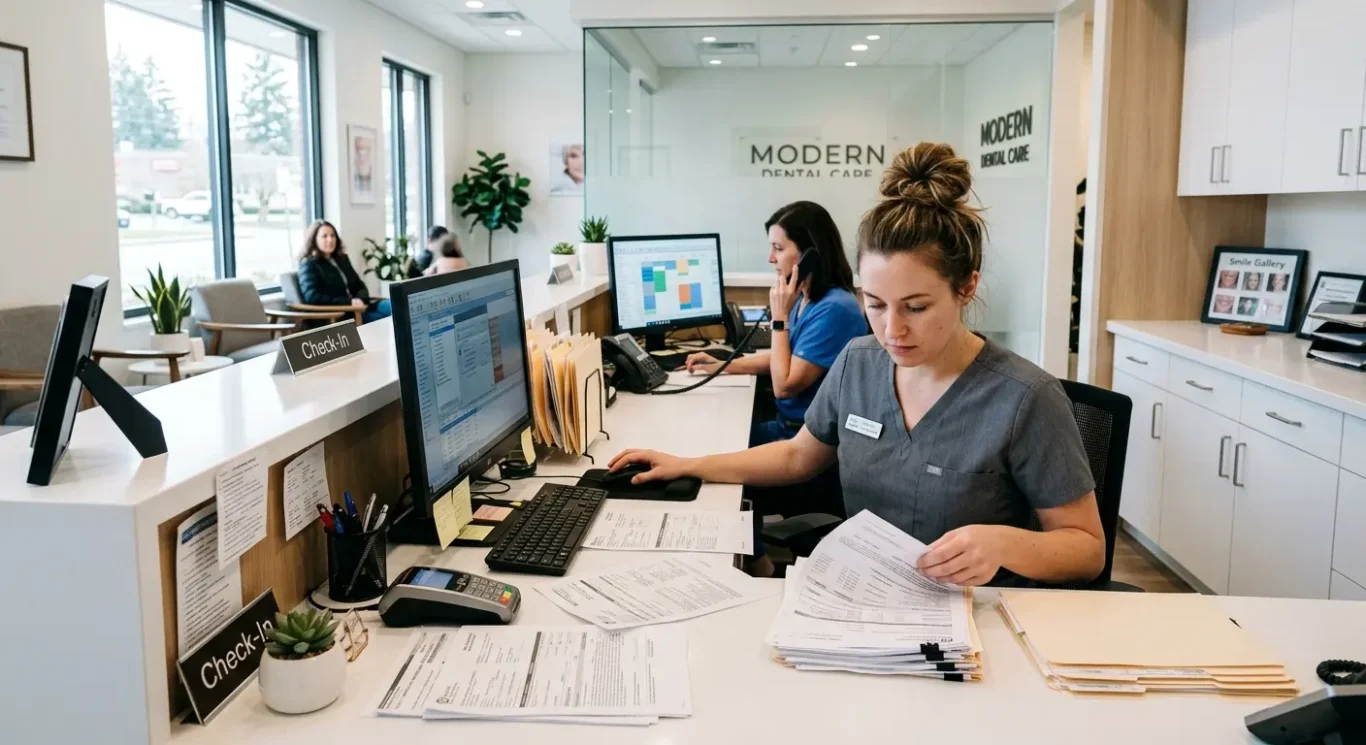
Why growth puts billing pressure on the front desk
A fuller schedule usually creates more admin work behind the scenes, even when daily production looks strong.
As patient volume rises, the office usually has more claims to submit, more insurance payments to post, more open balances to review, and more payer questions to answer. Verification work also tends to increase because more appointments mean more coverage checks, benefit questions, and plan details that need to be confirmed before the billing side can move cleanly.
Patient-facing tasks usually win the time battle
Front desk staff are often pulled toward phones, check-in, check-out, and schedule changes because those tasks cannot wait. Billing work can wait for a few hours, then a few days, and that is how claim submission, follow-up calls, and patient balance follow-up start stacking up even in an office that feels busy for the right reasons.
When those delays build up, cash flow can get uneven because money that should be moving through insurance and patient billing stays unresolved longer. Accounts Receivable (AR) grows when claims sit unworked, payer requests go unanswered, or patient statements are sent without any follow-up on remaining balances.
What early pressure often looks like
Common warning signs include claims aging without updates, insurance requests for attachments or corrections waiting in a queue, unpaid balances carrying forward month after month, and statement cycles that go out but do not lead to calls or follow-up. None of that means the front desk is doing anything wrong – it usually means the practice has more billing work than the current day can hold.

What outsourced dental billing actually covers
The work is administrative, handled off-site, and focused on specific tasks rather than every front office duty.
In this setting, outsourced dental support means non-clinical billing and patient communication work completed off-site for the practice. It usually covers defined parts of the revenue cycle so the office can keep control of scheduling, in-person patient interactions, and other front desk responsibilities.
Insurance billing
Insurance billing includes claim submission and follow-up after the claim is sent. That can mean checking claim status, responding when a payer asks for more information, and working unpaid or delayed claims so Accounts Receivable (AR) does not sit untouched.
Patient billing, verification, and recare
Patient billing support covers communication and follow-up on patient balances, including helping keep open balances from aging without contact. Insurance verification covers eligibility and coverage checks before treatment or appointments so the billing side starts with clearer benefit information. Recare calls are patient follow-up calls that support return visits and completion of planned care, which helps the schedule and billing stay connected.
The exact handoff varies by practice, and any questions about HIPAA handling or insurance rules should be reviewed with the practice’s own advisor.
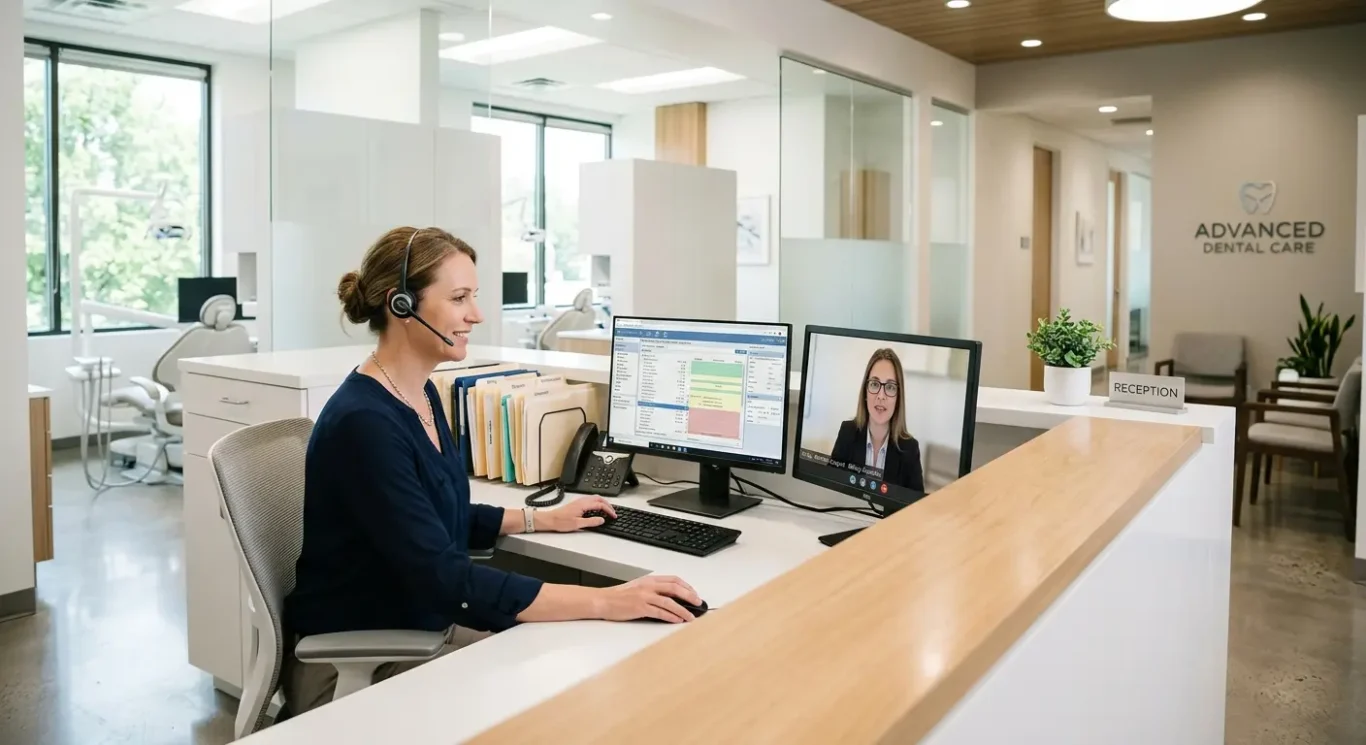
How outsourcing can help a practice grow without hiring right away
When schedules get fuller, outside dental billing support can add capacity while the office avoids another immediate hiring, training, and coverage burden.
Growing practices often find that billing work increases before they are ready to add another internal role. Hiring can take time, training takes attention away from daily operations, and coverage can still be thin when one person is out or pulled into front desk duties. That leaves claim submission, insurance follow-up, and patient balance follow-up competing with phones, check-in, and schedule changes.
Less billing work left on the front desk
Outsourced billing can reduce the amount of unresolved work sitting with front desk staff by moving defined administrative tasks off-site. Instead of asking the same team handling patients to also chase unpaid claims and open balances, the practice can assign those billing tasks separately and keep the front desk focused on the parts of the day that cannot wait.
Consistency matters when volume rises
As patient volume grows, inconsistent claim follow-up usually creates bigger cash flow problems than a single delayed claim. Accounts Receivable (AR) tends to rise when payer requests sit unanswered, denials wait for review, or older claims are touched only when someone has extra time. Steady follow-up helps keep work moving even during busy weeks, staff absences, or schedule changes.
Adding outside billing support is not the same as handing off ownership of the practice’s finances. The practice still decides what is delegated, what stays in-house, and how account activity is reviewed. Outsourcing is one way to add administrative capacity during growth, while oversight, financial decisions, and any compliance questions remain with practice leadership and should be verified with the practice’s own advisor when needed.

Where better billing support can improve financial stability
Steadier collections usually come from timely submission, regular follow-up, and fewer balances left untouched.
When claims go out promptly, the practice is less likely to lose time to avoidable delays such as missing filing windows, late corrections, or work that sits unsubmitted during a busy week.
Unpaid claims need regular attention
Submitting a claim is only the first step. If unpaid claims are not reviewed and followed up on consistently, requests from the payer can sit too long, denials may go unworked, and older balances can drift deeper into Accounts Receivable (AR). Regular follow-up helps the office see what is pending, what needs action, and what may require a patient balance to be updated.
Patient billing support can also help keep balances from sitting without contact for long periods. That does not mean every balance is collected quickly, but it can help the practice stay in touch with open accounts and keep patient receivables from being overlooked while the front desk handles phones, check-in, and schedule changes.
Cleaner receivables support clearer planning
When AR is more current and account status is easier to review, cash flow is often easier to forecast from month to month because fewer dollars are tied up in old unanswered items. Results still vary by payer, plan details, claim accuracy, patient response, and office processes, so better follow-through improves visibility and consistency rather than removing every delay or denial.

What to look for before handing billing work to an outside dental billing team
Use a simple checklist to see who handles what, how updates are shared, and how sensitive information is managed.
Before any work is assigned, the practice should ask exactly which tasks the outside team will handle, which tasks stay in-house, and where each handoff happens. That includes claim submission, claim follow-up, patient balance follow-up, insurance verification, and who responds when missing information, payer requests, or account questions come back to the office.
Reporting and communication expectations
The office should also ask how often claim status and aging Accounts Receivable (AR) updates will be shared, what those updates will include, and who reviews open items on both sides. A growing practice usually needs regular visibility into unpaid claims, older balances, and items waiting on office action, not just a message when something goes wrong.
Patient communication deserves its own questions because it affects both collections and the patient experience. The practice should know who contacts patients about balances, what kinds of questions are handled by the outside team versus the office, and when a patient issue is sent back to staff for review.
HIPAA and accountability
Any discussion about access, file sharing, and account information should include how HIPAA-related processes are handled and what data-sharing expectations apply, and those details should be reviewed with the vendor and verified with the practice’s own advisor. Clear accountability matters just as much because billing work moves faster when both sides know who owns follow-up, who approves exceptions, and who is responsible for unresolved claims or balances that keep aging.

Signs a growing practice may be ready for outsourced billing support
Look at where billing work is stalling, who keeps getting pulled away, and which routine tasks are no longer getting done consistently.
One common sign is a backlog in claim submission or claim follow-up. If claims are waiting to go out, payer responses are sitting unworked, or follow-up only happens when someone finds time, the issue is usually capacity rather than effort.
When aging starts to drift
Old balances building up in Accounts Receivable (AR) can point to the same problem. That might show up as unpaid insurance claims, patient balances that are not being addressed regularly, or accounts that stay open because no one has time to review what needs action and what needs write-off review under the practice’s existing process.
Another sign is when front desk staff spend too much of the day switching between patient-facing work and billing tasks. Phones, check-in, check-out, and schedule changes usually interrupt concentration, so insurance verification gets delayed, estimates go out late, and billing work is handled in short bursts instead of in a steady process.
Inconsistent work usually leaves a trail
If frequent interruptions mean some days are spent entirely on immediate office needs, billing follow-through often becomes uneven. A practice may be ready to consider outside support when verification delays start affecting scheduling decisions, financial conversations happen without current benefit details, or unresolved claims keep rolling forward because no one can stay on them consistently.

How to make the transition manageable for the office team
A workable setup starts with clear roles, steady communication, and realistic expectations from both sides.
Before any work is handed off, the practice needs to define who handles claim submissions, insurance follow-up, patient balances, and insurance verification. That includes knowing what stays with the office, what goes to the outside billing team, and who makes decisions when an account needs review.
Clean workflows reduce handoff problems
Outside support works better when documentation is consistent and office steps are easy to follow. If notes, supporting documents, balance policies, or verification details are incomplete, billing work slows down because someone has to stop and confirm what is missing before the next step can happen.
Regular check-ins give the practice a way to catch gaps early. Short review points can surface missing attachments, unclear account notes, payer requests, or patient balance questions before they turn into rework or older Accounts Receivable (AR).
Expect some coordination during the transition
Most transition periods require input from the practice team while responsibilities are being clarified and exceptions are being worked out. Front desk staff, managers, and ownership usually still need to answer questions, confirm existing processes, and help tighten office workflows so the billing process becomes more consistent over time.
Questions We Hear From Every Practice
Words from the Dental Billing Experts
A common problem during growth is that billing follow-up starts slipping because front desk staff are pulled in too many directions. In outsourced dental billing work, this often shows up when unpaid claims are not followed up on consistently, and that gap can quietly build a backlog.
For a practice that is growing, outsourced billing is usually most useful when the goal is steadier administrative follow-through without adding more in-office hiring pressure.