
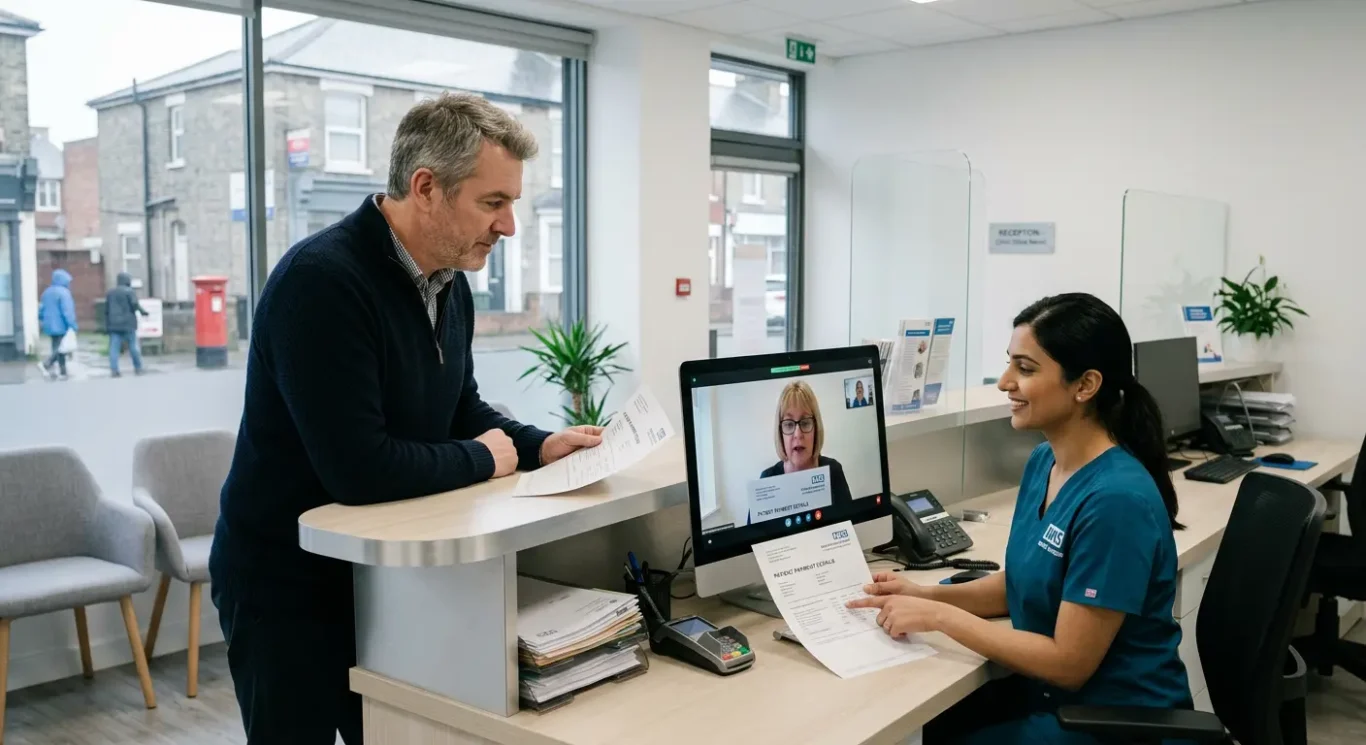
How outsourced billing improves patient communication
Most patient billing complaints are not really about the balance itself. They start when the amount due changes without a clear reason, an insurance update is still pending days later, or the front desk gives one answer in the morning and another by the afternoon. Outsourced dental billing can help by making statements, follow-up, and insurance status checks more consistent, which gives patients fewer surprises and gives your team less to untangle at the counter.
That matters because communication usually breaks down when billing work is being squeezed between phones, check-ins, and everything else. With steady administrative follow-up, patients are more likely to hear the same message each time, understand what is still waiting on insurance, and know what happens next. It is not magic. It is just clearer process, better timing, and less pressure on the people standing at the front.

Why billing confusion turns into patient frustration
Unclear estimates, slow insurance updates, and rushed answers can make a normal balance question feel like a problem.
Most tension starts when a patient thinks they already know what they owe, then the figure changes later.
That often happens because the first amount discussed was only an estimate. Once the insurer processes the claim, the final patient responsibility can be different based on cover, limits, waiting periods, exclusions, or what the insurer actually allows and pays.
To a patient, that can look like the practice changed the price after the fact.
In plain English, insurance processing is the insurer reviewing the claim and deciding what they will pay under the patient’s policy. Patient responsibility is the part left over after that decision, which may include excesses, non-covered items, or amounts the policy does not pay.
If that difference is not explained clearly, the next phone call is usually not a calm one.
Front desk teams are usually trying to answer these questions while handling phones, arrivals, departures, scheduling changes, and day-to-day interruptions. In that setting, it is easy to give a partial answer based on what is visible at the time, especially if the claim is still pending or someone else last touched the account.
That is not a staff problem. It is a workload problem.
When one person says the claim is still with the insurer, another says a statement is on the way, and a third says the balance should be ignored for now, the patient stops trusting the message. From there, even a small balance can turn into a longer call, a complaint at the desk, or a review issue no one wanted.
Delayed claim follow-up makes this worse because silence creates its own story. Patients fill the gap with assumptions, usually that the practice has either billed them too soon or has no clear handle on what is happening.
A fair judgement call is this: if the team cannot explain the current status of a balance in one or two plain sentences, the account probably should not trigger a firm collection-style conversation yet.
Clear notes, consistent status checks, and one agreed explanation for pending insurance do more for patient communication than longer scripts ever will.

What outsourced billing changes in everyday patient communication
When billing is handled the same way each day off-site, patients are more likely to get clear updates, fewer mixed messages, and steadier follow-up.
Most communication problems start before the phone rings.
If claim follow-up and patient balance follow-up happen consistently, there is usually a clearer answer ready when someone asks why a balance is still showing or whether insurance has paid. That matters because patients tend to react better to a plain status update than to a guess made in the middle of a busy check-in.
Consistent follow-up also stops accounts from sitting untouched for too long.
When claims are checked on a regular schedule, pending items are less likely to drift until the patient receives a statement with no recent explanation. The same applies to patient balances, where steady contact is usually easier to manage than a sudden call after weeks of silence.
Clear notes make a bigger difference than many practices expect.
If the account record shows what was submitted, what came back, what was explained to the patient, and what is due next, the next person handling the call is not starting from scratch. That is how patients get the same answer each time instead of three versions of the story from three different people.
This is especially useful when the original estimate changes after the payer has processed the claim.
A short, accurate note can save a longer and more difficult conversation later. A fair judgement call is this – if the notes would not let a different staff member explain the balance confidently in plain language, the account is not documented well enough yet.
Another practical shift is fewer hand-offs.
Front desk staff still need visibility, but they should not have to chase scattered answers between reception, management, and outside billing support just to respond to a basic balance question. When billing work is being handled in a steady off-site process, there is usually less bouncing around before the patient gets a usable response.
That saves time at the desk and lowers tension on the call.
Predictable workflows help with small failures that create bigger trust problems, such as missed statements, delayed callbacks, or accounts that move forward before the last update was explained. These are not dramatic mistakes, but patients notice them quickly because they look like disorganisation.
When statements go out in a regular pattern and callbacks are tied to clear account status, communication feels steadier.
It also becomes easier for the practice to decide what should happen first. For example, if a claim is still being actively followed up, that account may need an update call before it needs a firmer balance conversation.
None of this removes the need for privacy checks or careful handling of patient information. If a practice is reviewing any off-site support model, HIPAA questions should be verified with its own advisor.

How clearer insurance follow-up helps patients understand what they owe
The clearer the claim status is behind the scenes, the easier it is to give patients a straight answer about balances and next steps.
Most patient balance questions are really claim status questions.
If claim submission and follow-up are handled properly in the background, the balance shown to the patient is more likely to reflect what has actually been sent, what is still pending, and what still needs a response from the payer. Without that back-end work, the front desk is often left explaining a number that may still change.
That is where confusion usually starts.
An unresolved claim can leave a statement looking final when it is not really final yet. Patients see an amount due, assume insurance has already finished processing, and then get frustrated when the explanation turns out to be uncertain or incomplete.
Regular follow-up helps stop that gap between what the account shows and what the practice can explain clearly.
It also reduces the number of awkward calls where the only honest answer is that nobody has checked the claim recently. That answer may be true, but it does not build much confidence.
Insurance verification helps earlier in the process by setting expectations before treatment is scheduled or confirmed.
When eligibility and cover are checked in advance, the practice is in a better position to tell the patient what appears to be included, what limits may apply, and where an estimate could change later. That said, verification is not a guarantee of payment or cover, because the final decision still sits with the payer once the claim is reviewed.
That distinction matters more than many practices think.
Patients usually handle a change better when they were told from the start that benefits are checked in advance but not guaranteed. They are less likely to feel misled if the practice explains that payment timing and cover rules vary by payer, and that the final patient share may move once the claim is processed.
A practical judgement call is this – if a patient statement goes out while the insurance side is still unclear, the account may need a status update first rather than a firmer collection message.
That does not mean delaying every balance conversation. It means making sure the practice knows whether the next step is to chase the payer, update the patient, or collect a balance that is actually ready to be discussed.

Why patient billing support can reduce conflict calls
Clear statements and steady follow-up give patients a simple reason for the balance, so payment conversations feel less personal and less tense.
Most difficult billing calls start when a patient sees a balance but cannot tell how it was reached.
A statement that arrives on time and shows the insurance payment, any adjustment, and the remaining patient share gives the front desk something concrete to discuss. That matters because people usually respond better to a number when they can see the steps behind it.
Plain follow-up helps just as much as the statement itself.
If the only contact is a late notice after weeks of silence, the balance often feels bigger than it is. Even a small amount can turn into an argument once the patient feels caught off guard or thinks the practice waited too long to explain it.
Earlier outreach tends to keep the tone calmer.
A short message or call soon after insurance has processed gives the patient a fair chance to ask questions while the visit is still fresh and the account details are easier to explain. Leave it too long, and the conversation shifts from understanding the balance to disputing the timing.
The wording matters more than many practices expect.
Patients usually do better with direct, ordinary language such as: “Your insurer paid its part and the remaining balance on your account is £80.” Or: “This amount is the part not covered under your plan.” Or: “The claim has finished processing, and this is what is still outstanding.”
That is usually easier to accept than terms like EOB, write-off, pending review, or patient responsibility without context.
A sensible judgement call is to pause a firmer balance reminder if the statement does not clearly show what insurance paid yet. In that situation, an explanatory update is often the better next step, because the practice is answering confusion before asking for payment.
Structured patient billing support helps keep those explanations consistent, especially when the front desk is juggling phones, check-ins, and schedule changes. Consistency lowers the chance that one patient is told the balance is final while another is told it may still change.
That kind of mismatch is what turns a routine balance question into a conflict call.

What this means for the front desk team
Busy staff get more space to run the day when billing follow-up is handled in a steadier, more organised way.
Most front desk pressure comes from interruption.
A team member starts checking a patient in, the phone rings about a claim status, then someone at reception wants an old balance explained again. That stop-start pattern slows everything down and makes simple conversations feel harder than they should.
When claim follow-up and patient balance support are handled consistently, staff usually spend less time chasing updates or trying to piece together what happened on an account.
That matters at the busiest points of the day.
Reception can stay focused on arrivals, departures, booking changes, and keeping the schedule moving. Calls are still part of the job, but fewer of them turn into long billing investigations in the middle of check-in.
Patients notice that difference even if they never mention it.
A calmer front desk tends to sound clearer on the phone and more present at reception. People usually respond better when the person speaking to them is not also trying to hunt through notes while three other tasks are waiting.
It also helps with old balances.
If someone rings about a statement from weeks ago, the practice needs a simple account history ready to explain what insurance paid, what changed, and what remains. When that background work has already been reviewed properly, the conversation is shorter and less defensive.
That said, outsourced dental biling support does not remove every patient question.
Some patients will still ask at reception because that is the person in front of them, and some accounts genuinely need a quick handoff for context. A sensible judgement call is to let the front desk answer straightforward questions on the spot, but pass anything unclear or disputed to whoever is handling the billing follow-up rather than guessing.
That keeps the message more consistent and protects the flow of the day at the same time.

Questions practice owners should ask before outsourcing billing communication
Check how the work is tracked, who handles each part, and how your practice stays in control once patient billing conversations are managed off-site.
A good starting point is simple – ask exactly how account notes are written, where they are kept, and what detail is recorded after each patient call or follow-up attempt.
If a patient rings back a week later, someone should be able to see what was discussed, what balance was quoted, whether insurance was still pending, and what the next step was meant to be. Vague notes create repeat calls and mixed messages very quickly.
It also helps to ask who owns the next action on an account.
Some practices expect the off-site team to keep following up until there is a clear outcome. Others want certain items passed back to the office, such as disputes that need a manager decision or accounts that affect same-day scheduling.
That division should be written down before anything is handed over.
Call handling needs the same level of clarity. Ask what kinds of calls are handled off-site, what happens when a patient is upset or confused, and when the call is sent back to someone in the practice.
A practical judgement call here is to keep exceptions in-house at first. Straightforward balance questions and routine follow-up are easier to hand off than unusual complaints or sensitive account disputes.
You should also ask which tasks stay with the practice and which are handled off-site day to day.
For example, the outside team may handle claim follow-up, patient balance communication, or eligibility checks, while the practice still deals with in-person payment discussions, treatment-related questions, or final approval on refunds and write-offs. The right split varies by office, so it should match your staffing, not someone else’s model.
Protected health information needs its own conversation.
Ask what safeguards are in place for protected health information, who can access it, how access is limited, and how information is shared when patient billing support is handled off-site. Those answers matter because billing communication often includes account details, insurance information, and identifying data.
No outside provider should be treated as compliant just because they say they are. HIPAA requirements can depend on how work is structured, so the practice should verify any compliance expectations, contracts, and data-sharing arrangements with its own legal or compliance advisor.
Reporting matters more than many owners expect.
Ask what updates you will receive, how often they come, and whether they show open claims, patient balances being worked, unresolved issues, and items waiting on the practice. A short regular report is often more useful than a lot of scattered messages.
The point is not to recreate the work internally. It is to give the practice enough visibility to spot delays, answer staff questions, and know when something needs attention without chasing every account itself.

When outsourced dental billing is most likely to help
Communication problems often come from uneven billing follow-up, not from patients being difficult
A pattern usually matters more than a single complaint.
If the practice keeps getting the same balance questions, frequent callback requests, or repeated “I thought insurance was handling this” conversations, the issue is often upstream. Something in the billing process is not being explained clearly, updated consistently, or followed through at the right time.
Old Accounts Receivable (AR) is another clue.
When balances sit for too long, patients often stop trusting what they are told because each contact feels late and incomplete. That tends to create more calls, more handoffs, and more time spent rechecking the same account instead of moving it forward.
Recurring confusion rarely comes from one awkward patient.
If several patients are asking similar questions, or if staff keep promising to call back after looking into insurance, that usually points to inconsistent follow-up. In practice, that can mean claims were not chased promptly, notes were too thin, statements went out without context, or no one clearly owned the next step.
This is where outsourced billing can help most.
Not because an outside team says things differently, but because the work is handled in a more consistent order. Regular claim follow-up, clearer account notes, and patient balance communication done on time tend to reduce mixed messages at the front desk.
That said, results depend on what is already happening in the practice, how quickly payers respond, and how complete the available information is. If account histories are patchy or insurance details are wrong at the start, any billing support will spend time sorting that out first.
A fair judgement call is to look at volume before making changes.
If balance questions are occasional and AR is generally current, tighter internal routines may be enough. If the same issues show up week after week and staff are constantly calling patients back with revised answers, outside support becomes more practical.
Outsourcing works best when responsibilities are clear from the start.
The practice needs to decide who answers routine balance queries, who follows unpaid claims, what gets sent back to the office, and what information must be documented after each contact. Without that structure, confusion just moves from one team to another.
Questions We Hear From Every Practice
Words from the Dental Billing Experts
People often see the same pattern in busy practices – one patient gets one explanation, the next call gets a different one, and the balance becomes harder to discuss than it should be. A common problem is thin account notes, so checking account notes after each patient billing contact is one small method detail that usually makes later conversations calmer and more consistent.
The sensible judgement call is this: outsourced billing tends to help patient communication most when the practice wants steadier follow-up and clearer messages, not when it expects every billing question to disappear. If a patient balance is disputed or payer information is still changing, the practice still needs a clear hand-off and should verify any privacy or regulatory points with its own advisor.