
How outsourced billing supports the front desk
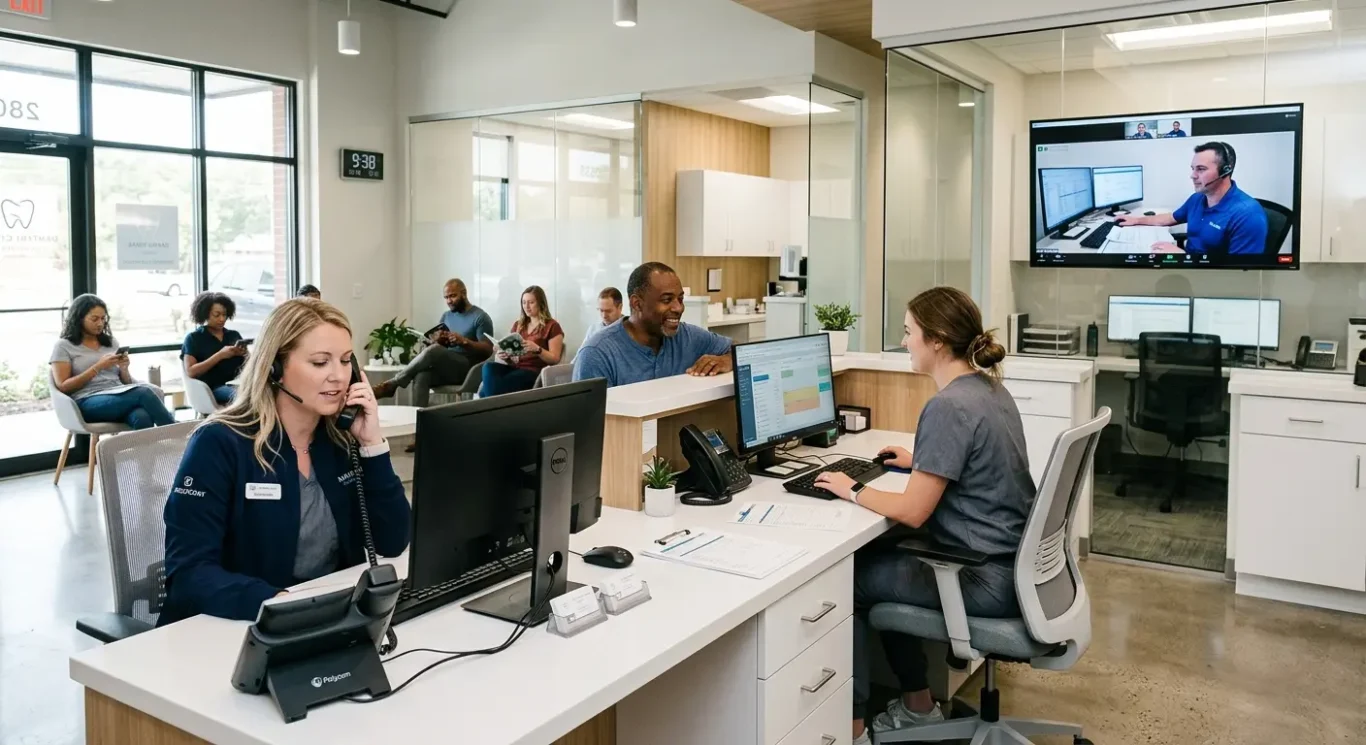
The front desk in a dental office rarely gets one task at a time. Phones are ringing, patients are checking in and out, treatment estimates need attention, and insurance questions keep landing in the middle of everything else. Then unpaid claims and follow-up calls sit in the same workflow, which is usually where the day starts to feel crowded.
Outsourced billing supports the front desk by moving non-clinical follow-up work off the schedule of in-office staff, so they can stay focused on patients, appointments, and clear communication at the desk. That separation also helps billing tasks get handled more consistently instead of between interruptions – which, honestly, is how a lot of backlog starts. This article looks at how that support model can improve daily workflow, clarify roles, and make the patient experience smoother without adding staff or changing practice software.
Why the front desk gets pulled into billing all day
Billing follow-up keeps landing between patient-facing tasks, which turns a full desk into a stop-and-start workflow.
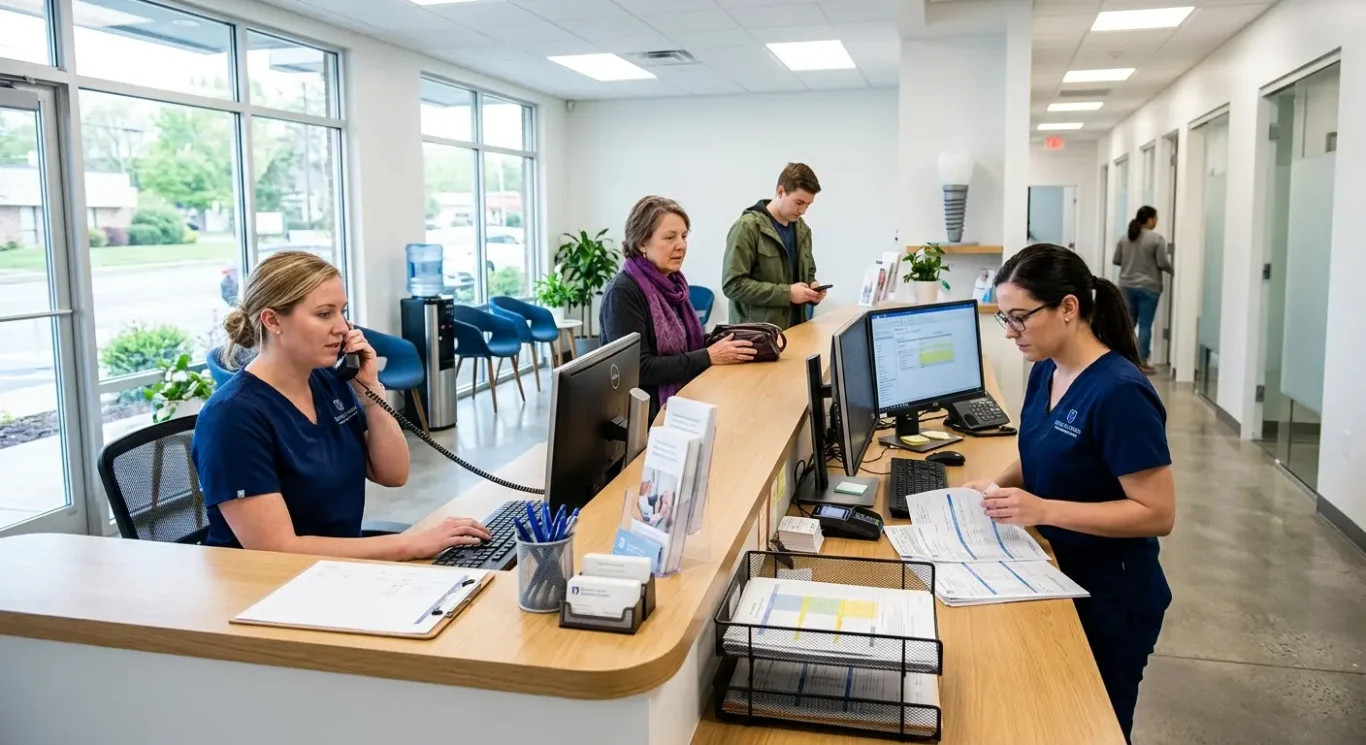
A front desk team may start the day focused on check-in, check-out, scheduling, and phones, then get pulled into claim status calls, missing information requests from payers, patient balance questions, and insurance follow-up that needs a same-day response. None of those items are unusual, but they do not arrive in a neat block of time.
Interruptions change the pace of the desk
When someone has to stop a check-out conversation to look up a claim, answer a question about a statement, or call an insurance company back before a deadline passes, the next patient waits and the phone queue gets longer. The work still matters, but the constant switching makes it harder to stay accurate, keep appointments moving, and give clear answers in the moment.
Urgent is not always the same as best handled here
The front desk handles work that is truly time-sensitive inside the office, like greeting patients, collecting information, reviewing balances due today, coordinating the schedule, and covering incoming calls. Billing follow-up is important because it affects cash flow and Accounts Receivable (AR), but much of it is detail-heavy work that usually needs uninterrupted attention rather than being squeezed between in-office priorities.
That is why practices often see billing tasks drift into spare minutes, end-of-day cleanup, or whoever happens to have a gap in the schedule. No one is doing anything wrong – the structure of the day keeps putting long-cycle follow-up work into a role built around immediate patient contact.

What outsourced billing handles and what stays in the office
The goal is to move defined administrative work off the front desk, not replace the people patients rely on in the practice.
Outsourced dental billing usually takes on insurance billing tasks such as claim submission, claim follow-up, and the back-and-forth needed when a payer asks for missing information or a claim needs review. Patient billing support may also be included, which means handling communication and follow-up on patient balances so those conversations do not keep landing on whoever is covering the desk that day.
Other support may be included
Some practices also include insurance verification and recare calls as part of the support model. Insurance verification helps by checking eligibility and coverage before visits, and recare calls help with patient follow-up and planned care scheduling, which can reduce another layer of outbound work for in-office staff.
What usually stays with the practice
Patient-facing conversations at check-in and check-out, treatment discussions, collection of amounts due in the office, and final decisions about scheduling, financial arrangements, or account exceptions usually remain with the practice. Those parts of the job depend on direct patient contact and office judgment, so outsourced dental billing support works best when roles are clear instead of overlapping.
Service scope varies by practice, so the handoff is usually defined around the tasks the office wants help with and the tasks it prefers to keep in-house. If questions come up around HIPAA or payer rules, the practice should confirm details with its own advisor.
How fewer billing interruptions help the front desk work better
Moving follow-up work out of the daily traffic flow gives in-office staff more room to stay focused on the patients and tasks in front of them.
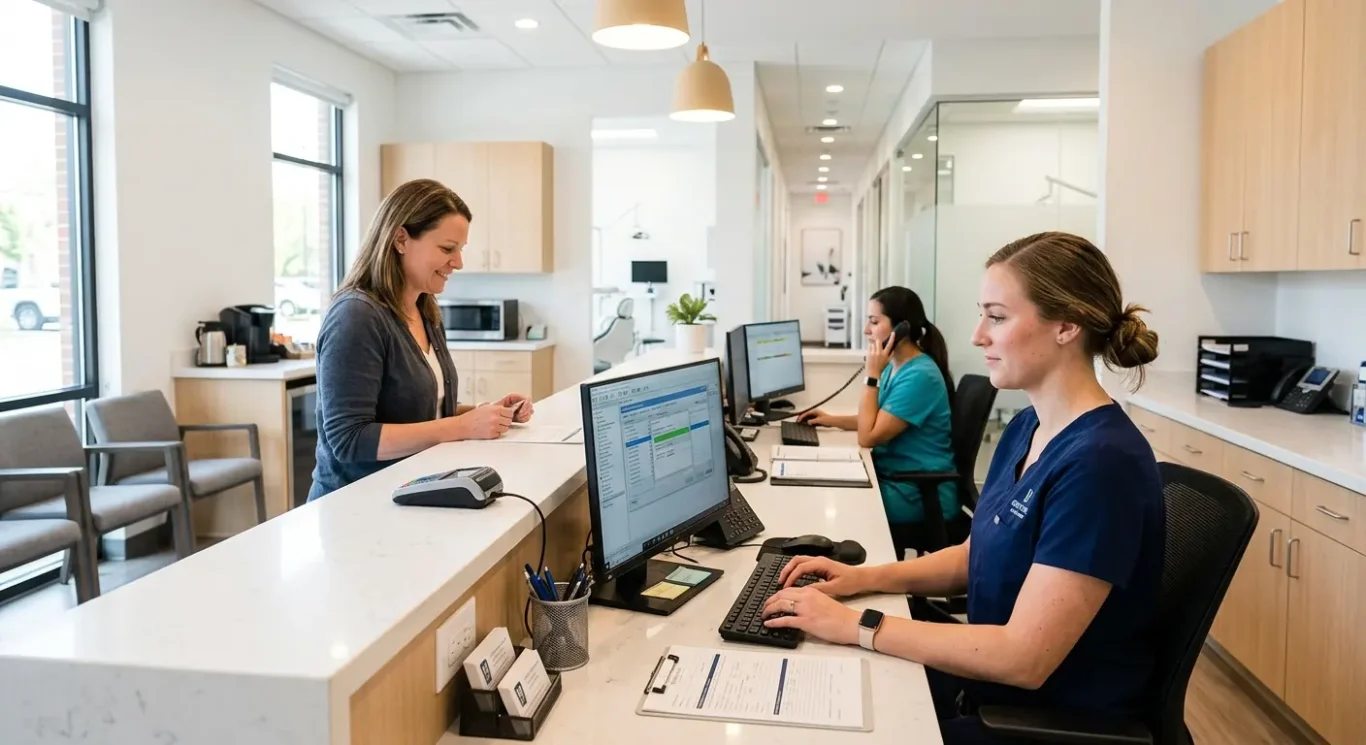
When billing follow-up is handled separately, front desk staff can give more consistent attention to patients who are physically in the office instead of splitting focus between check-in, phone calls, and old insurance claims that still need attention.
Fewer stop-and-start tasks during the day
Scheduling changes, balance collection, and check-out tend to lose momentum when someone has to pause and look into a claim from weeks ago. Keeping that back-office billing work with a dedicated outside dental billing team reduces the need to leave the front desk workflow just to track down payer status, missing information, or next steps on Accounts Receivable (AR).
Cleaner handoffs between office work and billing work
Practices also tend to see fewer dropped handoffs when roles are defined clearly. Instead of notes sitting at the desk, messages being passed between team members, or follow-up depending on who has time later, billing items move through a separate process while the office handles patient-facing work.
That kind of separation also makes training easier to maintain because new staff do not have to learn every billing chase task while they are still learning phones, scheduling, and financial conversations. Daily routines usually hold up better when the front desk is not constantly shifting between immediate patient needs and work that requires uninterrupted follow-up.
How role separation can reduce missed follow-up
Billing work tends to move more consistently when one process owns it instead of fitting it between front desk tasks.
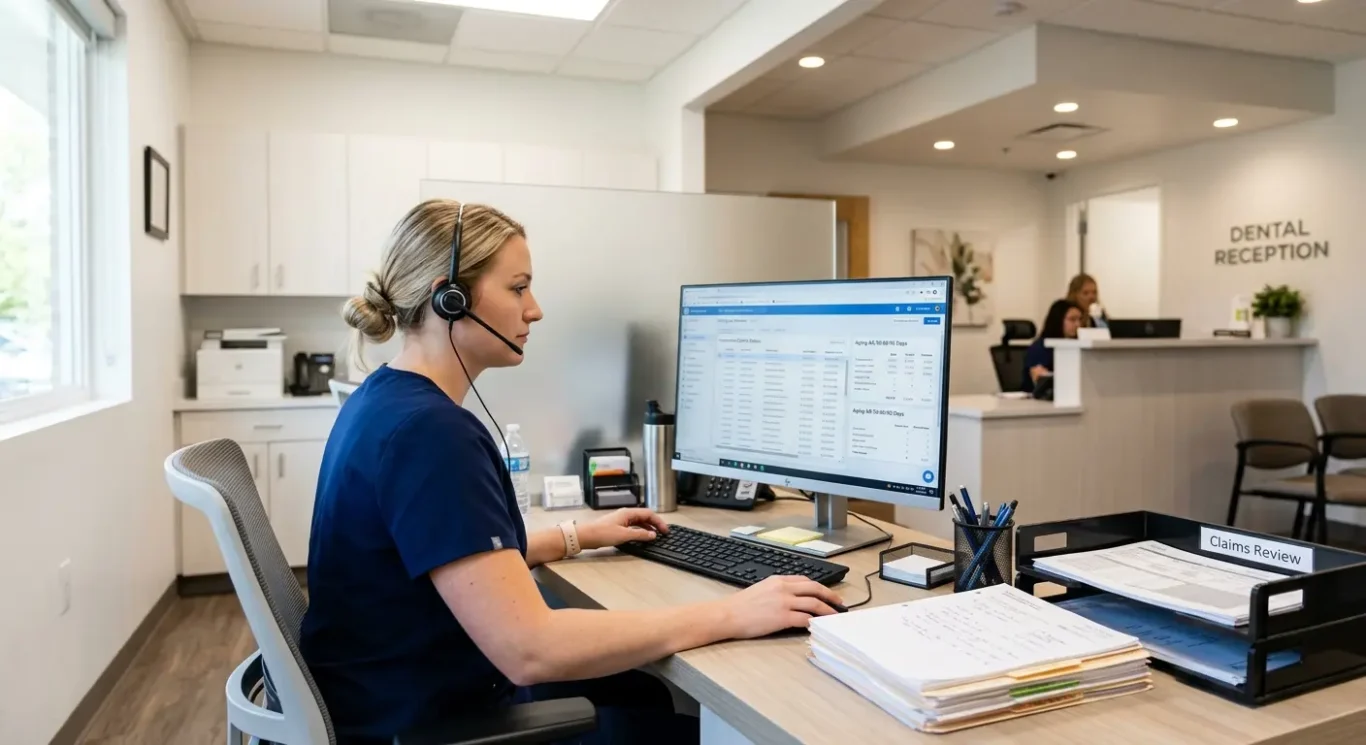
Claims and aging Accounts Receivable (AR) need regular attention because AR is money still owed to the practice, whether that balance is expected from insurance or from the patient. If unpaid items are not reviewed and worked in a steady way, they can sit untouched while newer daily tasks keep taking priority.
When everyone owns it, no one may have time for it
Shared ownership often sounds practical, but front desk staff are usually pulled toward phones, schedule changes, check-in, check-out, and in-office collections. Without protected time for billing follow-up, unpaid claims, pending insurance responses, and older patient balances can stay in limbo longer than intended.
A defined process helps each item move to the next step instead of waiting for whoever has a free moment. That usually means unpaid claims are checked for status, requests for additional information are identified, and patient balances are followed through based on the office’s instructions rather than being revisited only when someone notices them again.
This kind of separation also makes handoffs clearer because the front desk is not trying to remember which balances were already touched, which claims are still pending, and which accounts need another call or statement review. The office can stay focused on patient-facing work while billing follow-up happens on its own schedule.
What patients notice when the front desk is less buried in billing
Administrative work runs more smoothly when patient-facing tasks are not competing with claim follow-up and balance questions.
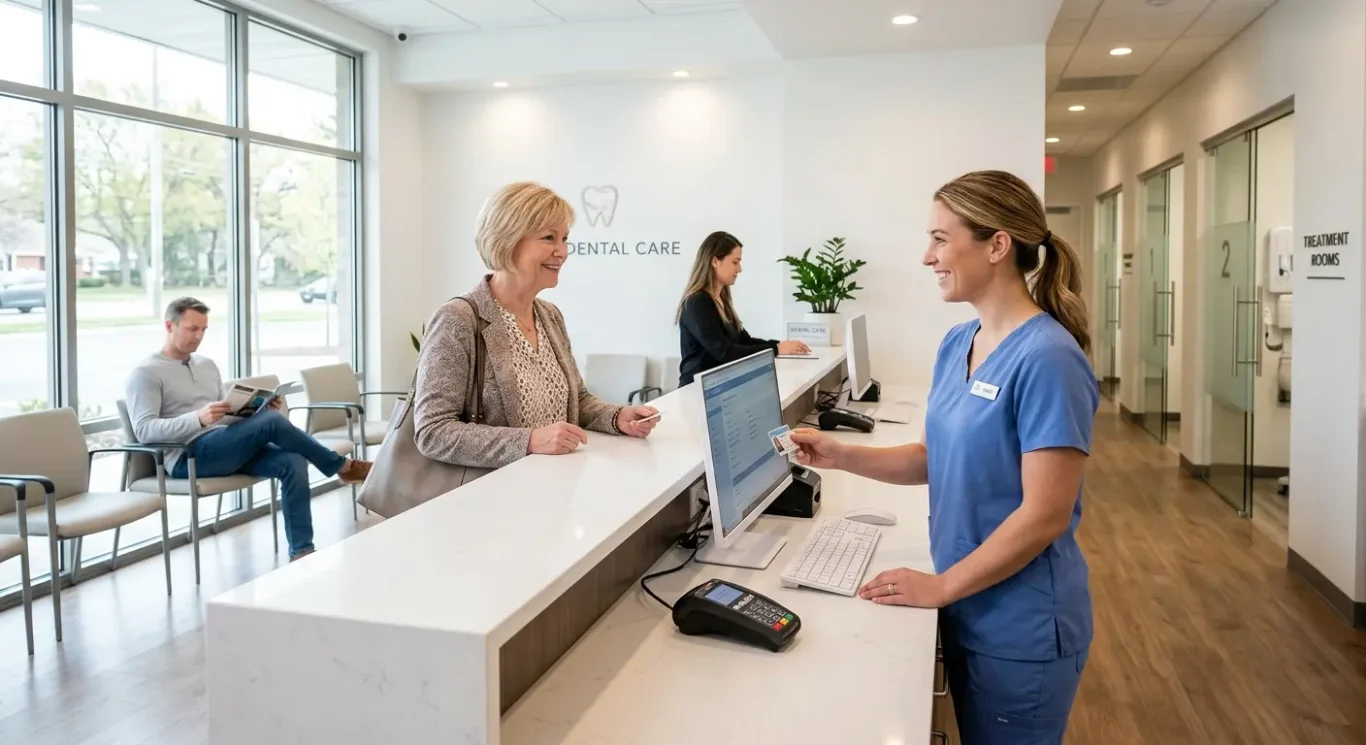
When front desk staff are not stopping to answer payer calls or dig through older claim notes, check-in and check-out usually move with fewer delays. That matters in small ways patients notice right away, like shorter waits, fewer pauses at the counter, and less back-and-forth while someone tries to finish two tasks at once.
Clearer conversations at the desk
It is easier to explain a next appointment, a payment due, or a routine office policy when the person at the desk is fully in that conversation. Switching between an in-person interaction and billing follow-up can make details harder to track, which is when messages get rushed, repeated, or left half answered.
Patient billing support can also help balance questions get handled more consistently because there is a separate process for reviewing statements, following up on open amounts, and responding based on the office’s directions. That does not remove every question at the front desk, but it can reduce how often staff need to sort through older account details in the middle of a busy patient check-out.
When administrative follow-up is organized, the office often feels calmer because fewer loose ends are competing for attention in real time. Patients may not know how billing work is divided behind the scenes, but they do notice when the front desk seems prepared, focused, and easier to deal with.
Addressing common concerns about outsourcing dental billing
A workable setup depends on staying informed, protecting patient communication, and checking how information is handled before anything is shared.
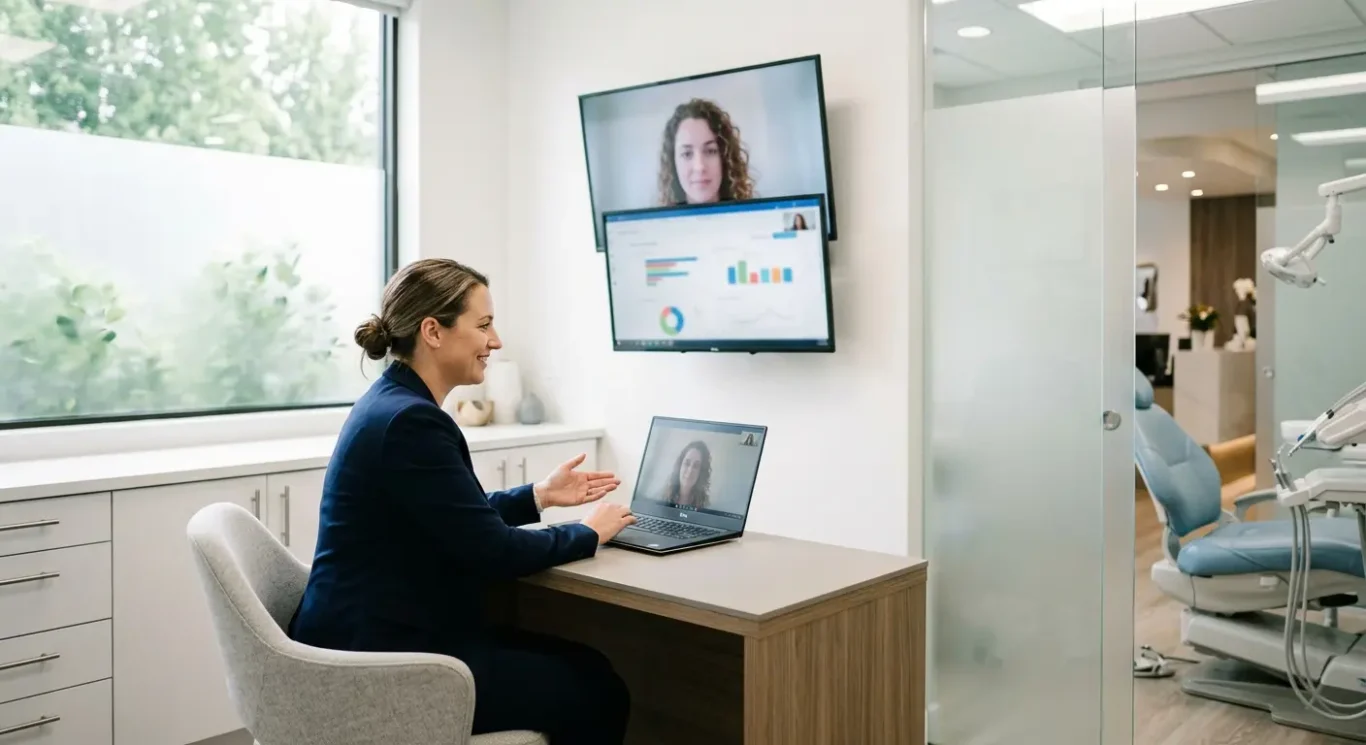
One of the biggest concerns is losing visibility once billing work moves off-site. That is why the setup matters as much as the service itself. Practice managers usually need clear points of contact, documented responsibilities, and a regular way to review open claims, patient balances, and items that still need office input.
Patient communication should match the office
Another concern is how patients will be spoken to and whether that reflects well on the practice. That is a reasonable question because billing conversations affect how organized and professional the office feels. Expectations should be spelled out in advance so follow-up on statements and balances follows the practice’s tone, policies, and escalation rules instead of being handled ad hoc.
HIPAA questions need direct review
Sharing patient and billing information also raises understandable concerns about privacy and Health Insurance Portability and Accountability Act (HIPAA) handling. Offices should ask how information is accessed, who handles it, and what safeguards are in place, then verify any compliance-related questions with their own HIPAA or legal advisor before moving forward.
Skepticism usually goes down when responsibilities are written down, communication channels are obvious, and open items are reviewed on a set schedule. That gives the office a way to catch gaps early without expecting the front desk to monitor every claim detail throughout the day.
Signs a practice may benefit from front-desk billing support
These are practical situations that often make outside help worth reviewing.
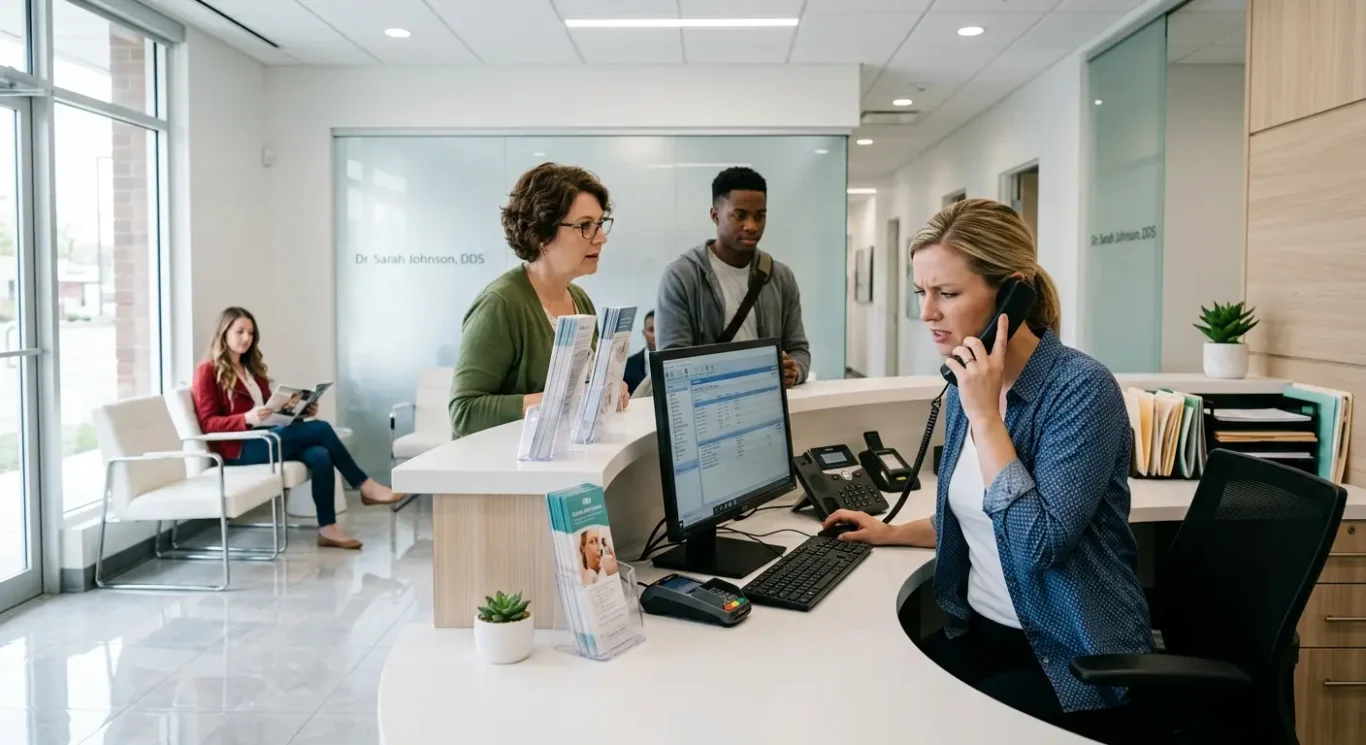
If front desk staff are regularly pulled away from patients to answer insurance questions, explain statements, or look up old balance details, the daily schedule can start to feel reactive. Check-in, check-out, phones, and routine patient communication usually suffer first because billing questions rarely come at a convenient time.
When follow-up starts to age out
Another sign is unworked claim follow-up or older Accounts Receivable (AR) continuing to build because no one has protected time to stay on it. Claims may have been sent, but appeals, status checks, missing information, and unpaid balances can sit too long when they are handled between interruptions.
Confusion over ownership is also a warning sign. When unpaid claims and patient balances move back and forth between the front desk, office manager, and whoever has a spare minute, tasks get duplicated or missed, and patients may get different answers depending on who picks up the phone.
When managers get pulled into status checking
Office managers often notice the strain when too much of their day is spent checking claim status, sorting out balance questions, or figuring out what has and has not been touched instead of managing staff, schedules, and office flow. That does not mean every practice needs outside support, but it is usually a sign that billing work is no longer staying in its lane.
How to evaluate outsourced billing support without disrupting the office
Use a simple review process to see what belongs off-site, what stays in the practice, and how both sides stay aligned.
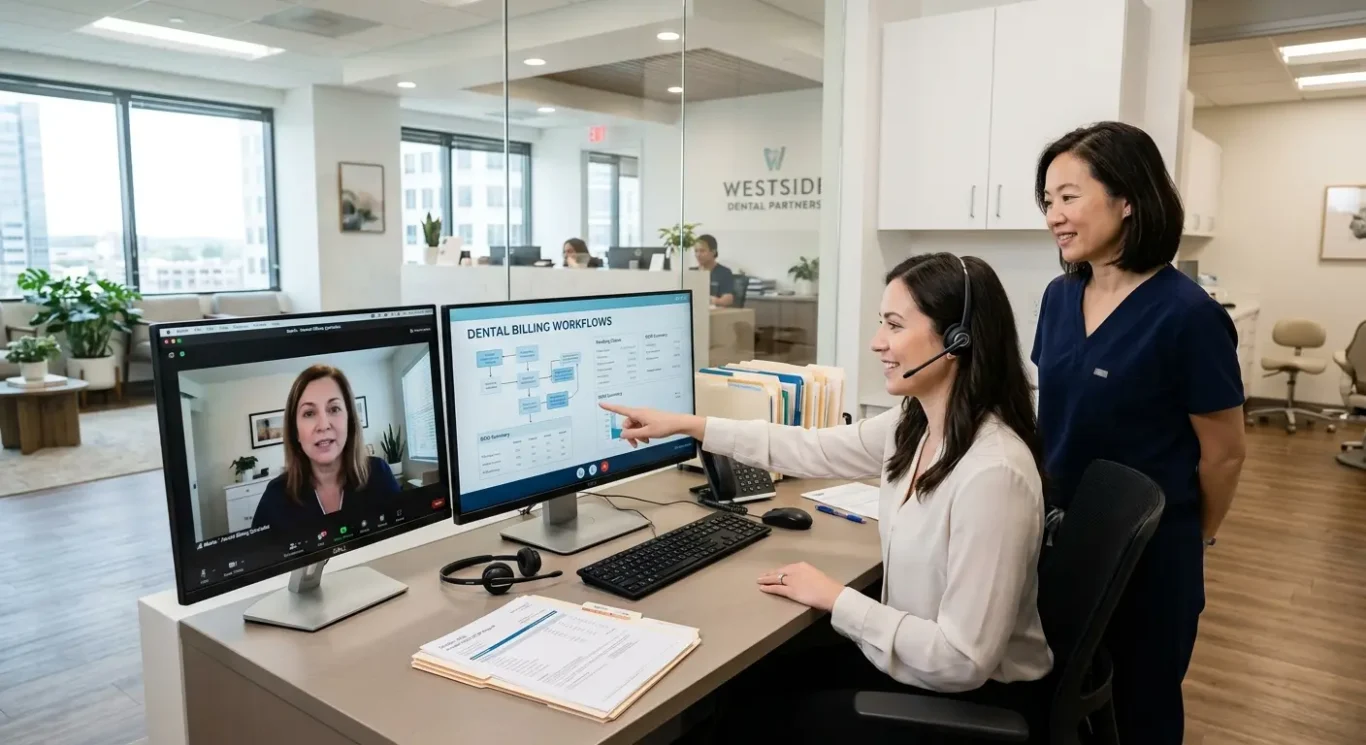
Before any work moves off-site, it helps to ask direct questions about service scope, who handles day-to-day communication, how open items are reviewed, and what turnaround expectations look like for claim submission, follow-up, and patient balance support. Offices should also ask what happens when something falls outside the agreed scope so front desk staff are not left guessing in the middle of a busy day.
Define ownership before work starts
The biggest source of confusion is usually not the billing itself. It is unclear ownership. Practices should decide which tasks stay with the office, such as in-person patient conversations or collecting at check-out, and which tasks move off-site, such as claim follow-up, insurance status checks, or patient billing follow-up, based on the service being considered.
Give the front desk only the daily information it needs
Front desk staff do not need every claim detail, but they do need quick access to the information that affects the schedule and patient conversations that day. That usually includes whether a claim is pending, whether more information is needed from the office, whether a patient has an unresolved balance issue that may come up at check-in or check-out, and who should answer questions that go beyond the front desk script.
It is also worth reviewing current processes before starting, especially for patient communication, insurance follow-up, and unresolved balances in Accounts Receivable (AR). If the practice has not agreed on how often patients are contacted, when unpaid claims are escalated, or who reviews older balances, outside support can expose those gaps rather than fix them, and any HIPAA or privacy questions should be verified with the practice’s own advisor.
Questions We Hear From Every Practice
Words from the Dental Billing Experts
A common problem in busy offices is that the front desk gets pulled back into claim status work all day, and we often see follow-up delayed simply because unpaid claims are not worked consistently. When that happens, staff attention keeps shifting between patients in front of them and insurance issues that need uninterrupted time.
If the goal is to protect the front desk from constant interruptions, outsourced billing support usually works best when the office keeps patient-facing questions in house and assigns claim follow-up and balance follow-up to a separate remote process. That kind of role split tends to make daily work easier to manage and gives patients a calmer check-in and check-out experience.