

Outsourcing insurance verification vs doing it in house
Most practices end up choosing between two workable options: keep insurance verification at the front desk, or hand it off to an outside dental billing partner. Neither choice is automatically better. It depends on your patient volume, how stretched your team already is, and how much follow-up work your practice can realistically absorb on a normal Tuesday.
This comparison looks at the parts that usually matter most in real life – speed, accuracy, cash flow, and staff focus. It also weighs the cost of mistakes against the cost of outsourcing, because a cheaper process on paper can still create denied claims, delayed payments, and more Accounts Receivable (AR) than your team has time to chase.
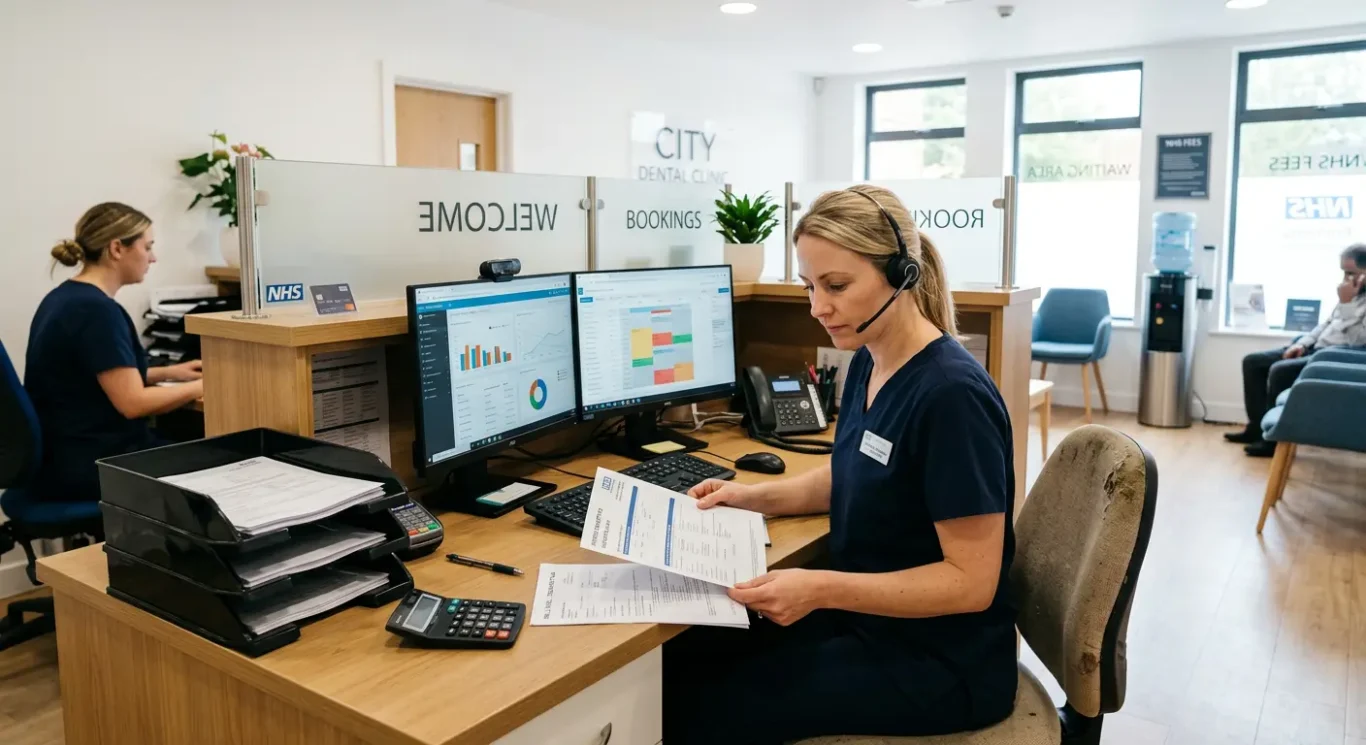
What insurance verification includes in day-to-day practice operations
What the task actually covers, in plain terms, so an in-house team and an outside partner can be compared fairly.
Insurance verification is the admin work of checking what a patient’s plan appears to cover before the appointment. That usually means confirming active cover, plan details, benefit limits, waiting periods, frequencies, and basic patient cost details where that information is available.
On paper, that sounds simple. In practice, it often means checking several details across different payer sources, reading plan notes carefully, and making sure the information is current enough to use for scheduling and estimates.
It is also important to keep the purpose clear. Verification is administrative work, not a promise of payment, and it does not guarantee that a claim will be paid exactly as expected.
That matters because staff sometimes treat verification like a final answer when it is really a best available check at that point in time. If the wrong detail is missed, the problem usually shows up later as a bad estimate, a claim issue, or extra phone calls after the visit.
Incomplete verification can cause more drag than people expect. A missed waiting period, an outdated frequency limit, or unclear patient responsibility can leave the front desk explaining balances they did not expect and the billing side fixing preventable rework.
Payer rules also change. Plans renew, employers switch benefits, networks update, annual maximums reset, and the information given on one day may not match what applies closer to the appointment or when the claim is processed.
That is why details should be confirmed as close to the appointment as the practice can manage, especially when the schedule is busy or the financial estimate matters to the patient’s decision. A reasonable judgement call is this – if verification was done too early and the plan is known to be fussy, it is usually worth a quick recheck rather than relying on old notes.
None of this means every practice needs the same workflow. It simply means the task is bigger than “is this patient active?”, and any fair comparison between in-house work and outsourcing should start with that reality.
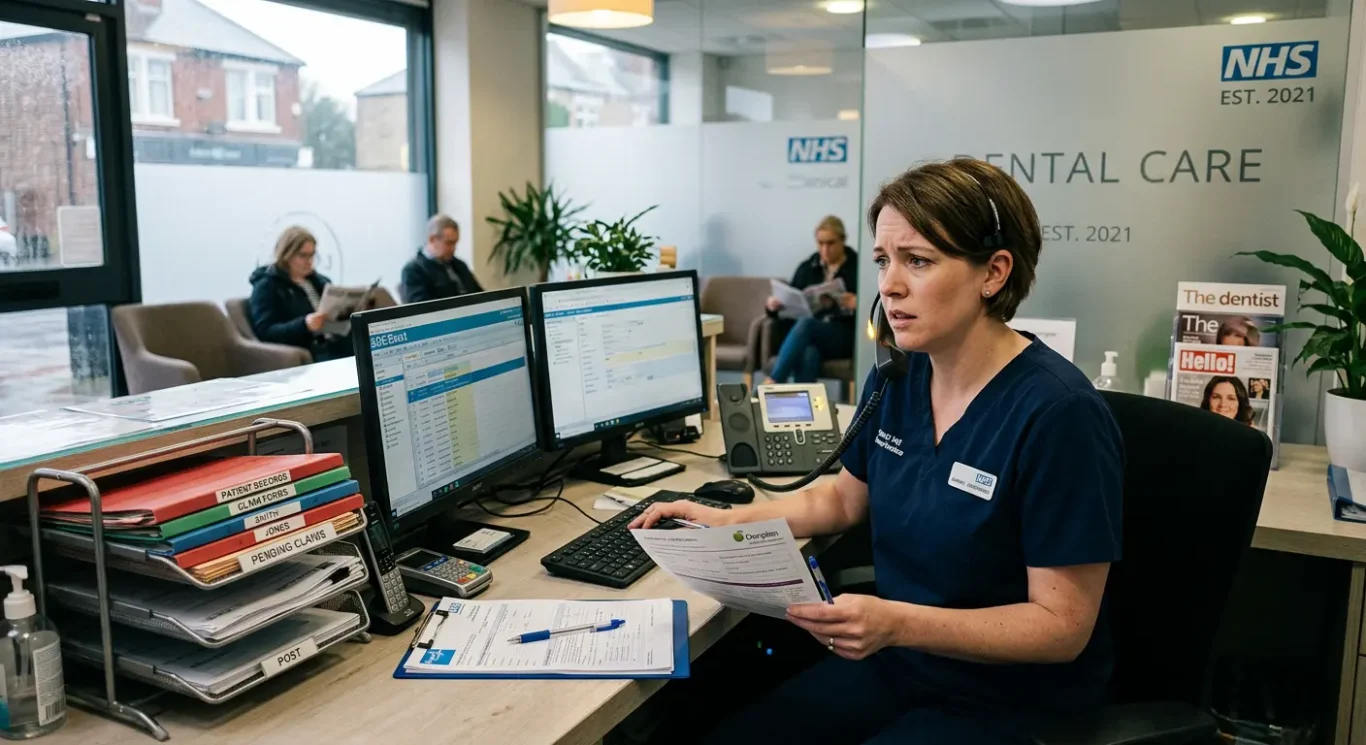
How in-house verification affects the front desk
Keeping verification inside the practice can work, but it pulls time and attention away from the jobs that are happening right in front of patients.
When a practice keeps insurance verification in-house, the work usually lands with the front desk or a cross-trained admin team. That can be perfectly reasonable. But it means verification is sharing space with phones, check-in, scheduling changes, payment questions, and the constant stop-start rhythm of the day.
The main issue is not whether the team is capable. It is that verification needs focused attention, and the front desk rarely gets a clean block of uninterrupted time. One call from a payer can take longer than expected, and meanwhile patients are arriving, lines are ringing, and someone needs an answer at the window.
That is where consistency starts to slip. Notes get left half-finished, follow-up items get pushed to later, and details that looked minor at the time can be missed. Usually the problem does not show up until the estimate is off or the claim comes back with a surprise.
Interruptions also affect follow-through. A team member may confirm active cover in the morning, mean to check frequencies or waiting periods next, then get pulled into three other tasks and never get back to it. Nobody is being careless. The work is simply competing with more visible demands.
In-house handling can still work well in the right setup. A practice with stable staffing, clear roles, and a manageable volume of verifications may do just fine internally. The same is true when one person owns the task and has protected time to complete it properly.
It also tends to work better when the schedule is predictable and the payer mix is familiar. If the team is checking similar plans every day, they often build good judgement around what needs extra attention and what can be handled quickly. That sort of pattern recognition is useful.
What usually makes the difference is process, not effort. Staff need a clear checklist, a standard place to record findings, and a simple rule for what must be rechecked before the appointment. If that is vague, the quality of the work will depend too much on who happens to be on shift.
Accountability matters as well. Someone should know which verifications are done, which are incomplete, and which need follow-up. Without that visibility, unfinished work can sit quietly until it turns into delayed payment or extra Accounts Receivable (AR).
Training is another part of the equation. Verification is not just reading back active cover. Staff need to know what details affect estimates, what wording from a payer is unclear, and when a note is too thin to rely on later.
A practical judgement call is this – if the front desk is regularly doing verification between interruptions, the practice should assume quality will vary unless there is a very tight process behind it. In-house can be the right choice, but only when the work has enough structure and enough protected attention to be done consistently.
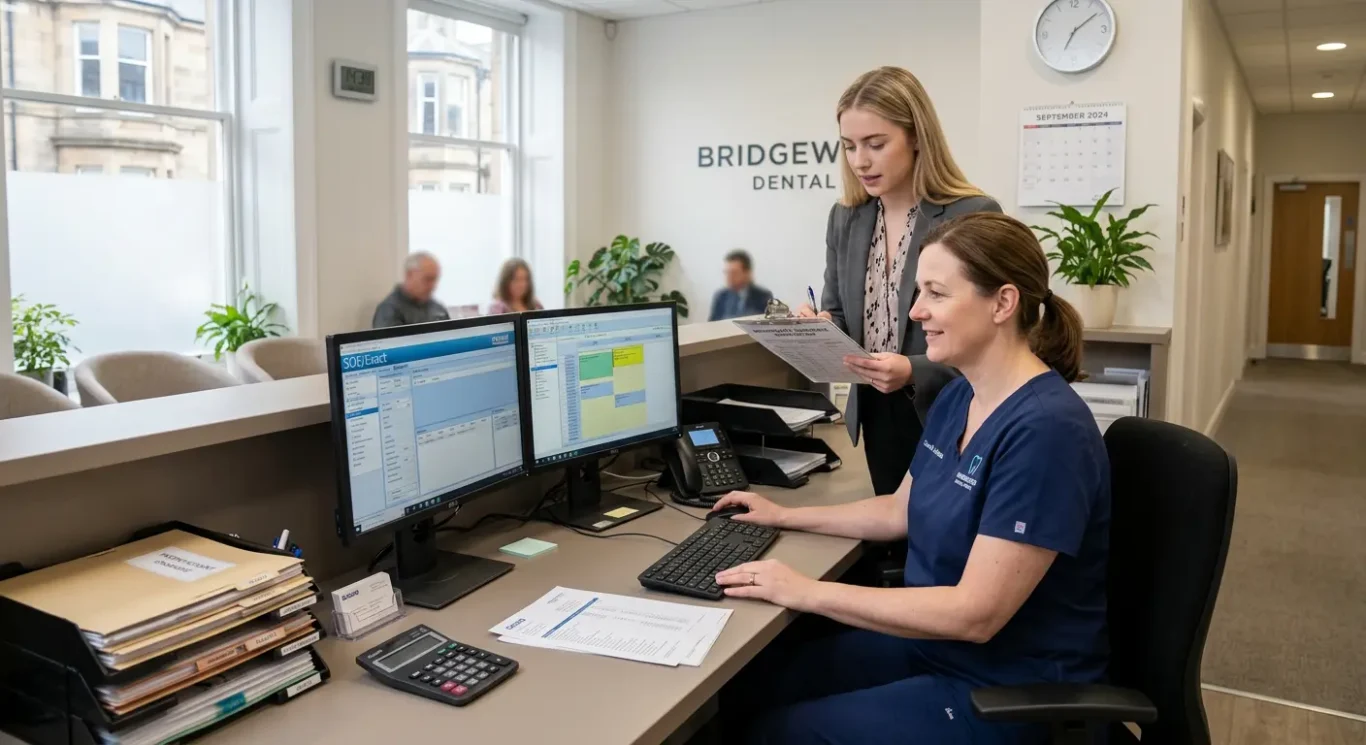
How outsourced verification changes the workload
What moves off the front desk, what still stays with the practice, and where coordination still matters
When verification is handled off-site, the biggest change is usually not speed on its own. It is that repetitive admin work stops competing with phones, check-in, schedule changes, and patient questions at the front desk.
That matters because verification is often made up of small, repeatable tasks. Calling payers, checking active cover, confirming limits, noting waiting periods, and documenting what was actually said all take time. None of it is difficult in theory, but it is easy for details to slip when staff are interrupted every few minutes.
Outsourcing can take that block of work away from in-house staff. In practical terms, that may give the team more room to handle patients, collect balances, answer schedule issues, and deal with the rest of the day without trying to squeeze verification into the gaps.
That said, the practice is still part of the process. Off-site teams do not know what is needed unless the office sends clear, timely information.
Usually that means sharing the patient’s insurance details, the planned appointment date, the services being scheduled, and any notes that affect what needs to be checked. If information is incomplete or late, the verification will be incomplete or late as well. That is not a fault of the model. It is just how handoffs work.
A clean handoff matters more than people expect. If the office sends over a patient name and policy number but not the actual appointment context, the verification may answer the wrong question. Active cover alone is rarely enough for estimating or billing follow-up.
There is also a management piece that does not disappear. Someone in the practice still needs to track deadlines, review what comes back, and flag anything unclear before the patient arrives.
This is where some practices get frustrated. They expect outsourcing to remove all involvement, when in reality it changes the type of work rather than removing it completely. The office does less payer-chasing, but it still has to manage communication and make sure the right cases are sent over at the right time.
A fair judgement call is this – outsourcing tends to help most when the front desk is overloaded by repetitive verification tasks, but it helps less if the practice is disorganised about requests, cut-off times, or follow-up. Poor handoffs can undo a lot of the benefit.
There is also the question of privacy and access. Any practice considering off-site verification should review how Protected Health Information is handled, what data is shared, and how that fits its own policies. That review should be done with the practice’s own HIPAA advisor or legal advisor, because specific compliance requirements are not the same in every situation.
So the practical shift is fairly simple. The repetitive checking work can move off the front desk, but ownership of clear information, timing, and oversight still stays with the practice.

Speed depends on timing, payer response, and office workflow
Neither option is always quicker – it depends on who has the right information early enough to act on it.
Speed is one of the first things practices compare, but it is not as simple as in-house versus outsourced. On some days, your own team can move faster because they are sitting next to the schedule, hearing patient changes in real time, and can react straight away.
That can matter when a patient is added at short notice, an appointment is moved, or the front desk spots a problem while speaking to the patient. There is no handoff delay because the people checking cover are already in the office and close to the details.
Outsourced teams can be faster in a different way. If their job is focused on verification work, they are not also answering phones, checking patients in, taking payments, and dealing with the usual interruptions at reception.
That focus counts. Verification often slows down in-house not because staff are careless, but because they are splitting attention across too many tasks at once.
Still, both models run into the same outside delays. Payer hold times, limited online access, missing plan details, and unclear benefits can slow everyone down, whether the work is done in the practice or off-site.
Late schedule changes create the same problem. If the appointment changes after verification has already been done, the check may need to be updated, and that eats time no matter who is responsible for it.
Missing information is another common bottleneck. If the team does not have the correct member ID, group details, patient date of birth, or enough context about what is being scheduled, the process stalls before it really starts.
That is why speed should be judged at the workflow level, not just by who touches the task. A fast verification is not very useful if it comes back after the patient has already arrived, or after the estimate has already been given.
A practical view is this – in-house often wins on immediate access, while outsourced often wins on protected focus. Which one feels faster in real life depends on whether requests are organised early and whether the office actually has time to use the answer when it comes back.

Accuracy depends more on process than location
Reliable verification usually comes from clear steps, consistent notes, and knowing when to stop and ask questions
Practices often assume in-house will be more accurate because the team is on site. Sometimes that is true. But accuracy usually comes from a repeatable process, not from where the person is sitting.
A good process is fairly plain. Use the same checklist each time, document answers in the same format, and set clear escalation rules for anything uncertain or missing.
That matters because most verification mistakes are not dramatic. They come from rushed calls, outdated notes left in the chart, copied information from a prior visit, or benefit limits that sounded clear at the time but were not fully explained by the payer.
Even small gaps can create bigger problems later. An estimate may be off, the front desk may give the patient too much confidence, or the billing team may struggle to understand what was actually confirmed when the claim needs follow-up.
Consistent verification notes help more than people realise. If the note shows who was contacted, when the check was done, what was confirmed, and what was still unclear, the office has something usable for estimates, claim follow-up, and patient conversations.
This is where documentation standards matter. If one staff member writes full notes and another writes only “active cover verified”, the practice cannot rely on the record in the same way.
Escalation rules matter too. If annual maximums, waiting periods, frequency limits, or plan exceptions are unclear, someone needs to know whether to call again, ask for more detail, or flag the case for review before speaking to the patient.
A practical judgement call here is simple – if your current notes cannot be picked up by another team member and understood in under a minute, the process is probably too loose. That is not an outsourcing issue or an in-house issue. It is a process issue.
It is also worth remembering that insurance information is often incomplete. Some payers give limited detail, some answers depend on how the service is finally billed, and some rules are plan-specific enough that two patients with the same payer may still have different cover.
So verification should be treated carefully, not as a guarantee. The goal is to reduce avoidable surprises and give the office a clear record of what was checked, while recognising that final payment decisions still vary by payer and should be verified with the appropriate advisor when needed.

The cost of errors is often higher than it looks
Look at the time and clean-up work behind mistakes, not just the hourly cost of getting verification done
Verification errors rarely stay small. A missed waiting period, unclear annual maximum, or old eligibility note can lead to under-collected patient portions, delayed claims, and extra follow-up later.
That usually creates a second round of work. Someone has to review the notes, call again, update the estimate, and explain the change to the patient.
Those patient conversations matter more than people expect. It is much easier to discuss costs clearly before the visit than to ask for more money afterwards because the original verification was incomplete.
This is where the real cost starts to show. The office is not only paying for the first verification attempt, but also for the rework that follows when the information was wrong, vague, or poorly documented.
That rework often lands on the same front desk team already answering phones, checking patients in, handling schedules, and dealing with billing questions. So the cost is not just wages. It is lost attention, slower collections, and more pressure on the day.
Paying internal staff time can still make sense if the process is consistent and the team has enough capacity to do it properly. Paying an outside service can also make sense if it reduces interruptions and gives the office cleaner information to work from.
Neither option is automatically cheaper. An in-house process may look less expensive on paper if the work is folded into existing roles, but that does not mean the practice is seeing the full cost.
The same is true in reverse. Outsourcing has a direct fee, so it is easier to spot, but the value depends on whether it actually reduces preventable mistakes and saves staff time that would otherwise be spent fixing them.
A practical way to judge it is simple – look at how often your team has to revisit verification after the patient has already been quoted or the claim has already been sent. If that happens regularly, the cheaper option on paper may not be the least expensive in practice.

Cash flow and Accounts Receivable (AR) are affected upstream
Better verification gives billing a cleaner starting point, but it does not finish the job
Insurance verification happens early, but the effects show up later in cash flow. If the office starts with clearer benefit details, claim submission is usually cleaner and the patient estimate is less likely to need correcting after the visit.
That does not mean every claim will pay exactly as expected. It means the billing team has better information to work from, with fewer gaps around eligibility, frequency limits, waiting periods, or whether a service needs extra review by the payer.
When verification is weak, the practice often feels it twice. First at the front desk, when the patient portion is quoted too low or too vaguely, and then later in billing, when the claim has to be revisited because the original notes were incomplete.
This is one reason older Accounts Receivable (AR) builds up. Accounts Receivable (AR) simply means money the practice is still waiting to collect, whether from insurance or from the patient.
Even when claims do get paid in the end, poor verification can slow everything down. Staff may need to rebill, appeal, update the ledger, or contact the patient again for a balance that should have been identified earlier.
Those delays matter because the payment may still arrive, just later and with more labour attached to it. That is not the same as a denial, but it still ties up cash and creates older AR.
A sensible way to look at verification is as support for billing, not a replacement for it. Good verification helps set up a cleaner claim and a clearer financial conversation, but someone still has to submit the claim correctly, post the response, and follow up when payment does not match expectations.
If a practice is deciding where to put its effort, this is the judgement call I would make – fix the earliest avoidable problem first. Cleaner verification will not solve every collections issue, but it often reduces the amount of messy follow-up that lands on the team later.
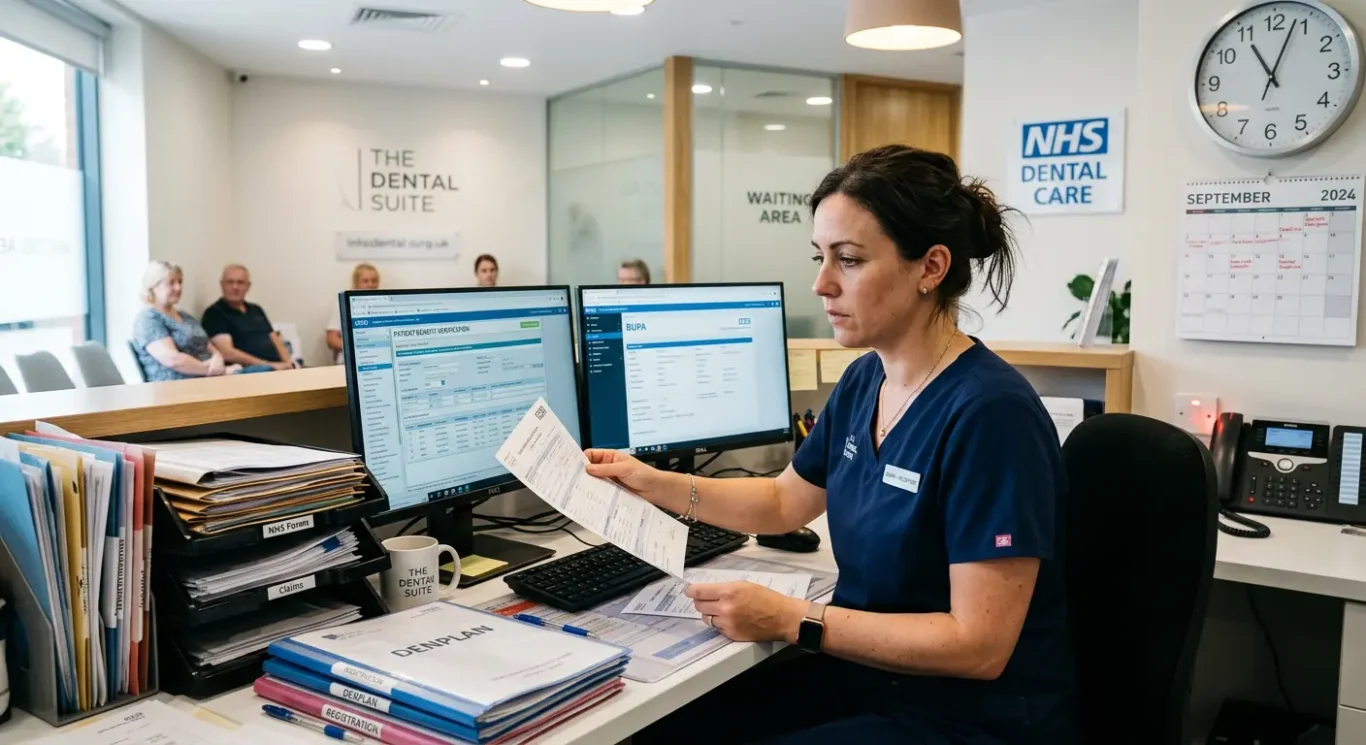
Questions to ask before choosing either model
Use a few practical checks to see whether in-house verification is truly working, or whether outside help would remove avoidable pressure.
The first question is simple. Does the current team have protected time to verify benefits before appointments, or is this work being squeezed in between calls, check-ins, and payment questions?
If verification only gets done when the day is unusually quiet, that is a staffing reality, not a process choice. In that case, keeping it in-house may still work, but only if something else is taken off the front desk.
The next thing to look at is documentation. Plan notes need to be clear enough that another staff member can open the account, read what was verified, and understand what the payer said without guessing.
That includes basic details like eligibility, benefit limits, waiting periods, and anything that may affect the patient estimate or claim handling. If each person documents differently, the office ends up re-checking the same account more than once.
It also helps to ask how often the office is dealing with rework from missing or incorrect verification. Not the occasional payer issue. The repeated kind – revised estimates, extra patient calls, claim follow-up that starts with “what was checked here?”
If that rework shows up every week, the real cost is usually staff attention. That is usually the point where the cheapest-looking option stops being the most practical one.
Then there is the comfort level around off-site handling of administrative work. Some practices are fine with it. Others are not, especially if leadership has concerns about privacy, access, or how patient information is shared.
That part should be reviewed properly, not waved through. If a practice is considering outsourcing, leadership should understand who handles the work, what information is needed, and what privacy expectations apply, then confirm details with its own advisor where needed.
A fair decision usually comes down to this – if the team has time, documents consistently, and rarely has to revisit verification, keeping it in-house can be reasonable. If those three things are not true, outsourcing is worth considering because the strain is already showing up in the day-to-day work.
When a mixed approach may make sense
A middle option can work when the office wants relief without handing over every part of verification.
Some practices are not ready to choose fully in-house or fully outsourced. That is reasonable. A mixed setup can help if the split is simple and everyone knows who handles what.
In practical terms, that might mean routine pre-appointment checks are handled off-site, while urgent same-day checks stay with the front desk. It can also mean outside help covers heavier schedule days, while quieter days are managed in house.
Another common split is by appointment type. New patient visits, larger cases, or appointments booked further in advance may be verified ahead of time by an outside team, while quick add-ons and last-minute schedule changes stay with the office because the timing is tighter.
The reason some offices keep same-day checks in house is simple. When a patient is already on the schedule and the desk needs an answer now, it is often faster for the person on site to handle it. Routine checks for future appointments usually allow more lead time, so moving that work off-site can take pressure off the phones and check-in.
This only works if one person owns the process. Not every task, but the process. Someone needs to decide what gets sent out, what stays in house, how notes are documented, and how missing items are caught before the patient arrives.
Without that owner, gaps show up fast. The outsourced dental billing team may assume the office handled a same-day change, and the office may assume it was already checked off-site. That is where estimates go wrong and follow-up work multiplies.
A fair caution here – hybrid is not automatically better. If the handoff rules are fuzzy, it can create more work than it removes. In most offices, a simple split is better than a clever one.
It also varies by payer and by office workflow. Some payers are straightforward enough that the office is comfortable handling them. Others take more time, need closer reading, or are just harder to pin down, so pushing those into a planned workflow may make more sense.
If a practice is unsure, this middle ground can be a sensible test. Just keep the boundaries clear, assign one owner, and review whether it is actually reducing rework. If it is not, the split probably needs simplifying.
Questions We Hear From Every Practice
Words from the Dental Billing Experts
In day-to-day billing work, a common problem is not effort but inconsistency. We often see verification notes handled differently from one person to the next, which makes follow-up harder when a claim is delayed or a patient estimate needs to be reviewed. That kind of rework costs time quietly.
A calm judgement call is this – if your front desk is already stretched and verification is being done late or unevenly, outsourced support can make sense. If your in-house process is steady, documented, and easy to review, keeping it inside the practice may be the simpler choice. Either way, the better option is the one your team can do accurately and consistently.