

Why dental practices fail to follow up patients
In a busy dental office, patient follow-up usually loses to whatever is happening right now – phones ringing, check-ins, insurance questions, schedule changes, and someone at the desk needing an answer fast. That does not mean the team is careless. It usually means follow-up has no protected time, no clear owner, and no repeatable system, so it gets pushed to later and then later again.
This matters because unanswered patient balances, delayed insurance responses, and unfinished recall or planned care outreach can quietly add pressure to cash flow, Accounts Receivable (AR), and front desk workload. Honestly, most practices mean to stay on top of it. This article explains why follow-up slips, what tends to get in the way, and why the problem is more operational than personal.
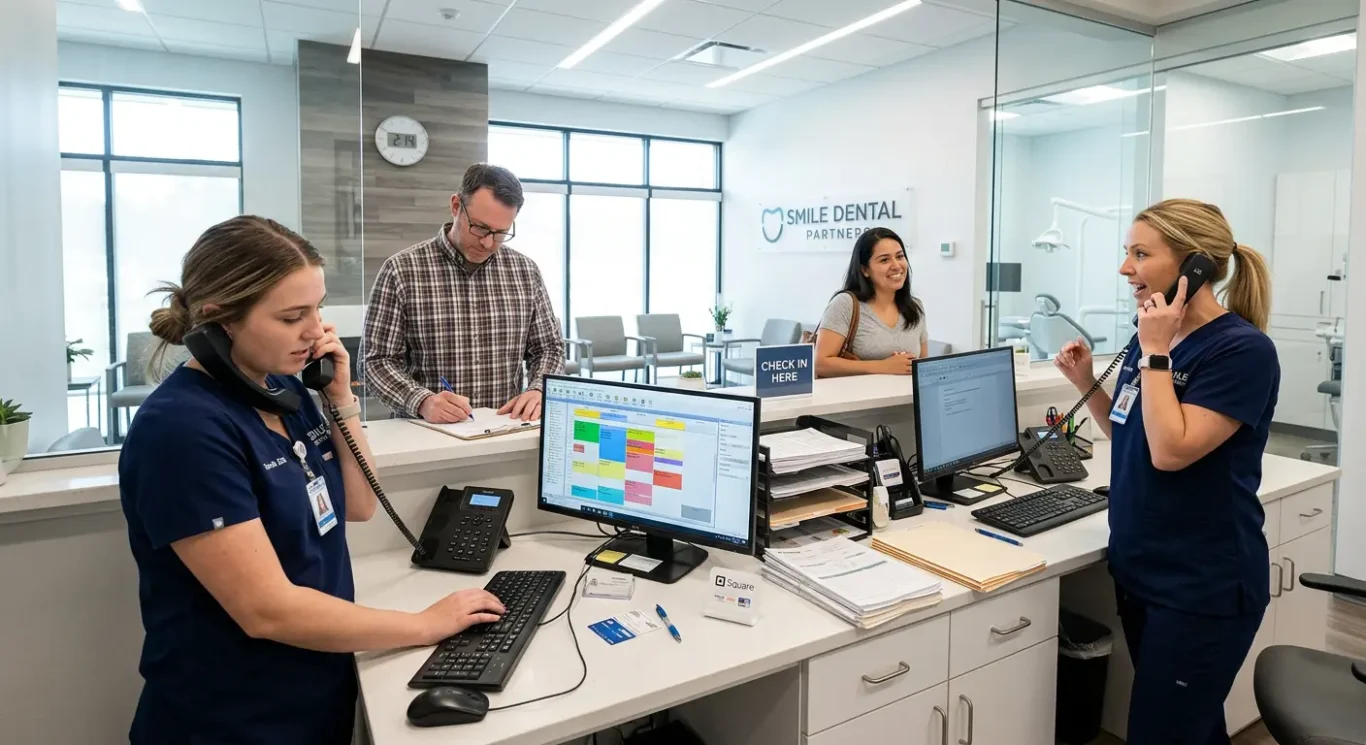
Patient follow-up is easy to delay when the front desk is overloaded
Daily interruptions usually win because they affect the next few minutes, not the next few weeks
Most front desk teams are not avoiding follow-up. They are responding to whatever is in front of them first: ringing phones, patient check-in, check-out, treatment estimates, schedule changes, and insurance questions that need an answer before someone leaves the office.
Urgent work and important work are not the same
Urgent work feels loud and immediate. Important work is often quieter, like calling on an unpaid balance, checking a missing insurance response, or reaching back out to a patient who did not schedule. The urgent task interrupts the desk right now, while the important task affects cash flow and Accounts Receivable (AR) later, so it is easier to postpone without meaning to.
That is why follow-up often gets pushed into the gaps between patients or saved for the end of the day. By then, the team is catching up on messages, finishing paperwork, handling last-minute schedule issues, or helping the last patients leave, and the follow-up list is still sitting there.
When this keeps happening, the problem is usually workload design, not effort. A capable team can still fall behind if follow-up has no protected time, no clear handoff, and no simple process for deciding what needs attention first.

Many practices rely on memory instead of a clear follow-up process
Missed outreach usually comes from loose workflows, not bad intentions.
Follow-up starts to slip when it lives in sticky notes, inbox flags, handwritten lists, or someone’s memory of who still needs a call. Those reminders can work for a day or two, but they break down fast when the schedule changes, a team member is out, or another task feels more urgent.
If no one owns it, it often waits
A task without a set owner often turns into something everyone assumes will be handled later. Patient balance calls, insurance follow-up, and unscheduled treatment outreach can all sit in that gray area, especially when the front desk is sharing phones, check-out, and scheduling at the same time.
Simple rules help more than most practices expect. If the office knows when to call, when to text, and when to send a statement, the team spends less time deciding what to do next and more time actually doing it. The same goes for unfinished treatment follow-up – without a basic cadence, some patients hear from the office too often while others do not hear back at all.
That inconsistency shows up in two places at once: patient balances stay open longer, and planned treatment that could have been scheduled keeps drifting. Neither problem usually comes from a lack of effort. It comes from follow-up being handled differently depending on who is working the list that day.

Patient follow-up can feel uncomfortable, especially around money
Staff often delay these calls because they do not want to sound harsh, restart an awkward conversation, or step into a financial question without clear notes.
A past-due balance call can put a front desk team member in a hard spot. They may know the account needs attention, but still hesitate because they do not want the patient to feel pressured, embarrassed, or frustrated with the office.
Unscheduled treatment calls carry the same tension
Reaching back out after a patient did not schedule can feel personal in a way that routine reminders do not. If the last conversation ended with “I need to think about it” or “I need to check my budget,” many team members worry that another call will come across as pushy instead of helpful.
Missing details make the call harder to start
Unclear financial notes create even more hesitation. If the account does not clearly show what was already discussed, whether a statement went out, what insurance paid, or what the patient questioned last time, the person making the call has to piece it together on the spot. That uncertainty makes it easier to put the task off until there is more time, which usually means it does not happen that day.
Once a few days turn into a few weeks, the next call feels heavier. The balance is older, the patient may be more surprised to hear from the office, and the staff member has had more time to anticipate a difficult reaction, so delay quietly feeds more delay.

Small gaps in documentation create bigger follow-up problems later
When account notes are thin or unclear, routine patient contact gets delayed, repeated, or handled awkwardly.
A callback is harder to make when the account does not clearly show the current balance, how that balance was explained, whether the insurance estimate was updated, or if anyone already called, texted, or mailed a statement. Instead of picking up the phone, staff have to stop and reconstruct the story from scattered notes, old claim activity, and partial checkout details.
Patient billing depends on clear account history
In plain terms, patient billing is the office work tied to collecting what the patient still owes after insurance processing and prior payments are applied. That includes sending statements, answering balance questions, and following up on unpaid amounts, which gets much slower when there is no record of prior outreach or the numbers on the account do not match what the patient was told before.
Unclear details also make normal conversations feel risky. If a team member is not sure whether insurance paid as expected, whether the estimate changed, or whether a balance note is missing from the last visit, they may avoid follow-up because they do not trust the account enough to speak confidently. That hesitation protects the staff member in the moment, but it leaves Accounts Receivable (AR) sitting longer and pushes patient billing support further down the list.
Even when someone does make the call, incomplete notes can create the kind of back-and-forth patients notice right away. The office may ask a patient to pay without being ready to explain the amount, or reach out again without realizing a message already went out, which makes the communication sound disorganized instead of helpful.

When no one tracks results, follow-up stays reactive
Many offices know follow-up matters, but they do not have a simple way to see what is still pending, what is already overdue, or who needs the next call.
That is where the work shifts from managed outreach to constant interruption. Reacting to inbound patient calls means answering questions only after a patient notices a statement, a balance, or a missed insurance payment. Outbound follow-up is different because the office decides what to work, in what order, and before the account gets older.
Old balances age when no one owns the list
Aging Accounts Receivable (AR) usually grows quietly when older balances are not reviewed on a regular basis. Staff may handle the newest questions first because they are in front of them, while unresolved patient balances, unpaid claims, or accounts with no response from prior outreach sit untouched for another week.
Without a clear view of what is unresolved, cash flow gets less predictable. Money that should be followed up on stays in AR longer, and the front desk keeps spending time reopening the same accounts, answering repeat balance questions, and figuring out what happened last instead of moving the account forward.
Simple review points make the work easier to start
A practice does not need anything complicated to spot this. It can be enough to regularly review accounts with older patient balances, claims still not resolved after prior submission, statements that went out without a response, or notes showing outreach was started but never completed.

Missed patient follow-up affects more than collections
Delayed outreach often creates confusion, schedule gaps, and extra pressure on the team before it shows up as a money problem.
When a patient does not hear back after a statement, estimate change, or insurance update, the balance can start to feel unclear. They may wait to pay because they are not sure what is due, or hold off on scheduling because they do not know what happens next on the account.
Unfinished communication can weaken the schedule
Some appointments are delayed for simple administrative reasons, not because the patient is unwilling. If a balance question is still open, prior outreach was never completed, or the patient is waiting for a call back before deciding, the schedule becomes harder to keep full and more likely to shift at the last minute.
Open accounts create repeated interruptions
Unresolved patient accounts also add pressure inside the office. Front desk staff end up revisiting the same balances, answering the same questions, and trying to piece together old notes between check-ins, phone calls, and insurance tasks, which makes the day feel crowded even when the actual number of accounts is manageable.
Most practices do not run into one dramatic breakdown here. What usually happens is slower and more operational: small follow-up tasks stay open, communication gets less clear, and the extra work builds until cash flow, scheduling, and staff focus all feel less steady than they should.

A workable follow-up system should be simple enough to use on busy days
The process should be clear, repeatable, and realistic for a front desk that is already juggling patients, phones, and insurance questions.
What usually helps most is not a complicated workflow. It is a basic structure where someone owns the next step, timing rules are clear enough to follow without debate, and account notes show what was done, when it happened, and what still needs a response.
The process has to match the pace of the office
If follow-up only works on slow days, it usually will not hold. Dental offices need a process that can survive interruptions, schedule changes, and staff switching between check-in, phones, claims, and patient balance questions without losing track of open accounts.
Some practices handle this entirely in-house. Others use off-site non-clinical administrative help for tasks such as insurance claim follow-up, patient billing support, or recare calls, while keeping clinical decisions and patient care in the office.
Review privacy and data-sharing rules before changing the workflow
When outside dental billing support is part of the process, it is important to confirm how protected health information is accessed, shared, and documented. HIPAA and data-sharing expectations should be reviewed with the practice’s own advisor before any workflow changes are made.

When outsourced dental billing support may make sense
Some offices hesitate to hand off billing tasks, but certain backlog patterns can be a practical reason to consider extra administrative help.
If Accounts Receivable (AR) keeps aging, claim follow-up is repeatedly pushed back, or the front desk spends too much time switching between check-in, phones, and open balances, the issue may be workload capacity rather than effort.
What this type of support covers
In this context, outsourced dental billing help is non-clinical and administrative. It can include insurance billing follow-up, patient billing support, insurance verification, and recare calls, while treatment discussions, clinical decisions, and in-office patient care stay with the practice.
What to expect from the work
This kind of support usually makes the most sense when open claims are not being worked consistently, patient balance follow-up is uneven, or eligibility checks are taking time away from the schedule. It can also help when recare outreach keeps slipping because the same staff members are covering too many front office tasks at once.
Outcomes depend on the condition of the accounts, the payer involved, and how clear the practice’s own process is before work starts. Some balances move faster than others, some payers respond slowly, and privacy or workflow questions should be reviewed with the practice’s own advisor before any data-sharing arrangement is changed.
Questions We Hear From Every Practice
Words from the Dental Billing Experts
A common problem in dental offices is not refusal to follow up, but loss of momentum once the day gets busy. In outsourced billing and administrative support, this often shows up when the next contact date is not written in the account note, so the balance sits until someone happens to notice it again.
If patient follow-up keeps slipping, that usually points to a process issue more than a staff attitude issue.